- 1. What we stock for boundary walls
- 2. Boundary wall tiles design: pick by exposure, then by looks
- 3. The top of the wall decides whether the tiles last
- 4. Efflorescence, algae and the white marks that are neither
- 5. Gate pillars and the entrance stretch
- 6. Matching the boundary wall to the house front
- 7. Fixing method: where boundary walls fail
- 8. Common mistakes
- 9. Frequently asked questions
04 November 2026
Boundary Wall Tiles Design: Elevation Tiles, Coping and Pillars

A compound wall has a harder life than the house it protects. It takes rain on both faces and on the top, it stands in soil that stays damp for weeks after the monsoon, and it gets splashed by the hose, the car wash and the neighbour's sprinkler. Most boundary wall tiles design problems we see come from treating it as a small piece of the house front, when it behaves very differently.
This guide is about that wall specifically: what to tile it with, how to handle the top edge and the gate pillars, why white patches and green streaks appear, and how to fix tiles so they are still there in ten years. For the house elevation itself, our house front wall tiles design guide covers the ideas.
One thing upfront. We carry 149 elevation tile designs and every one is quoted on request, so there are no per sq ft prices here. Our elevation tiles cost guide explains what drives the cost of an exterior job, and that is the better place to start a budget.
What we stock for boundary walls
Boundary walls take the same tiles as a house front, so our elevation tiles range is the one to look at.
| Type | Designs | Where it suits a boundary wall |
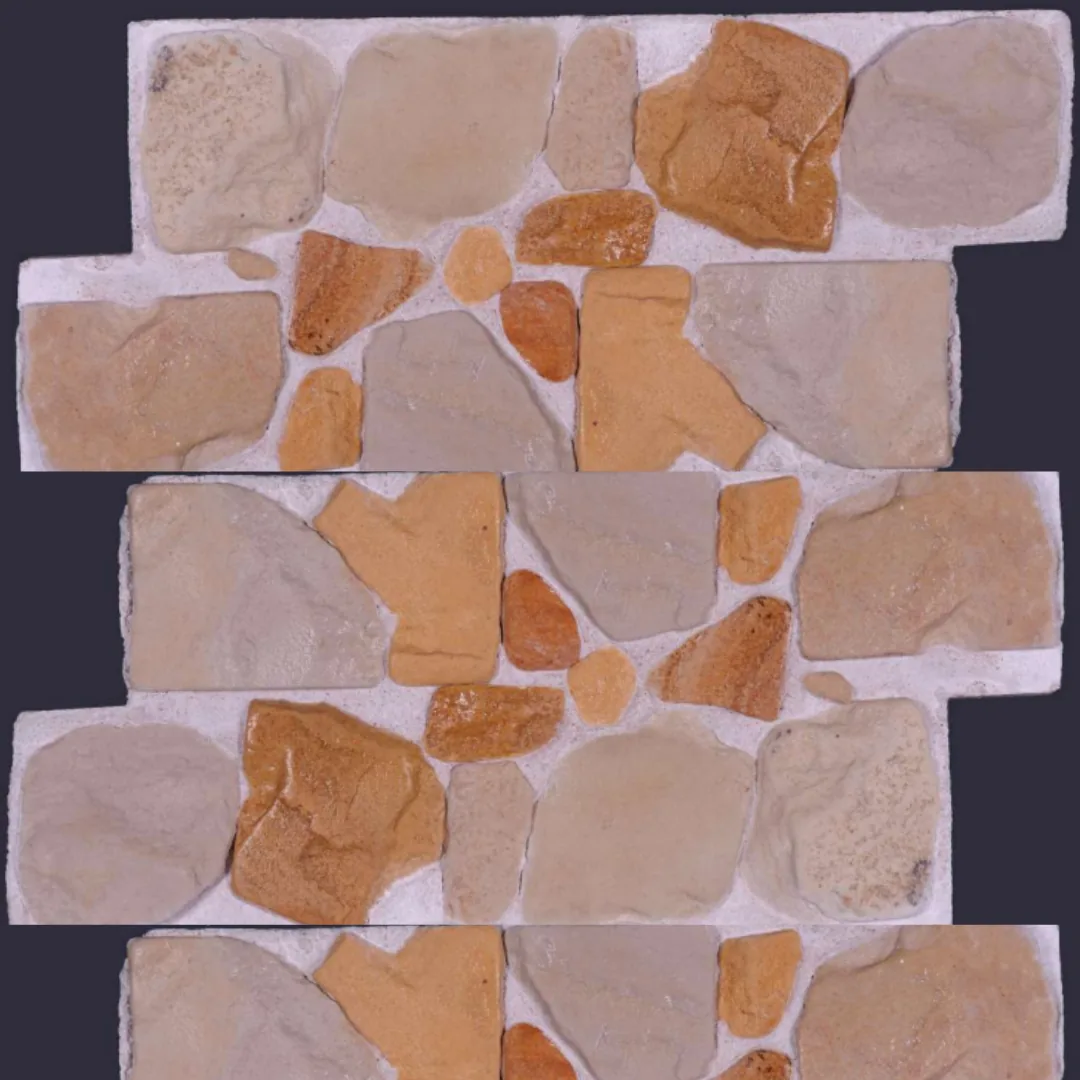
| Stone pattern | 58 | Full wall runs, especially facing a road |
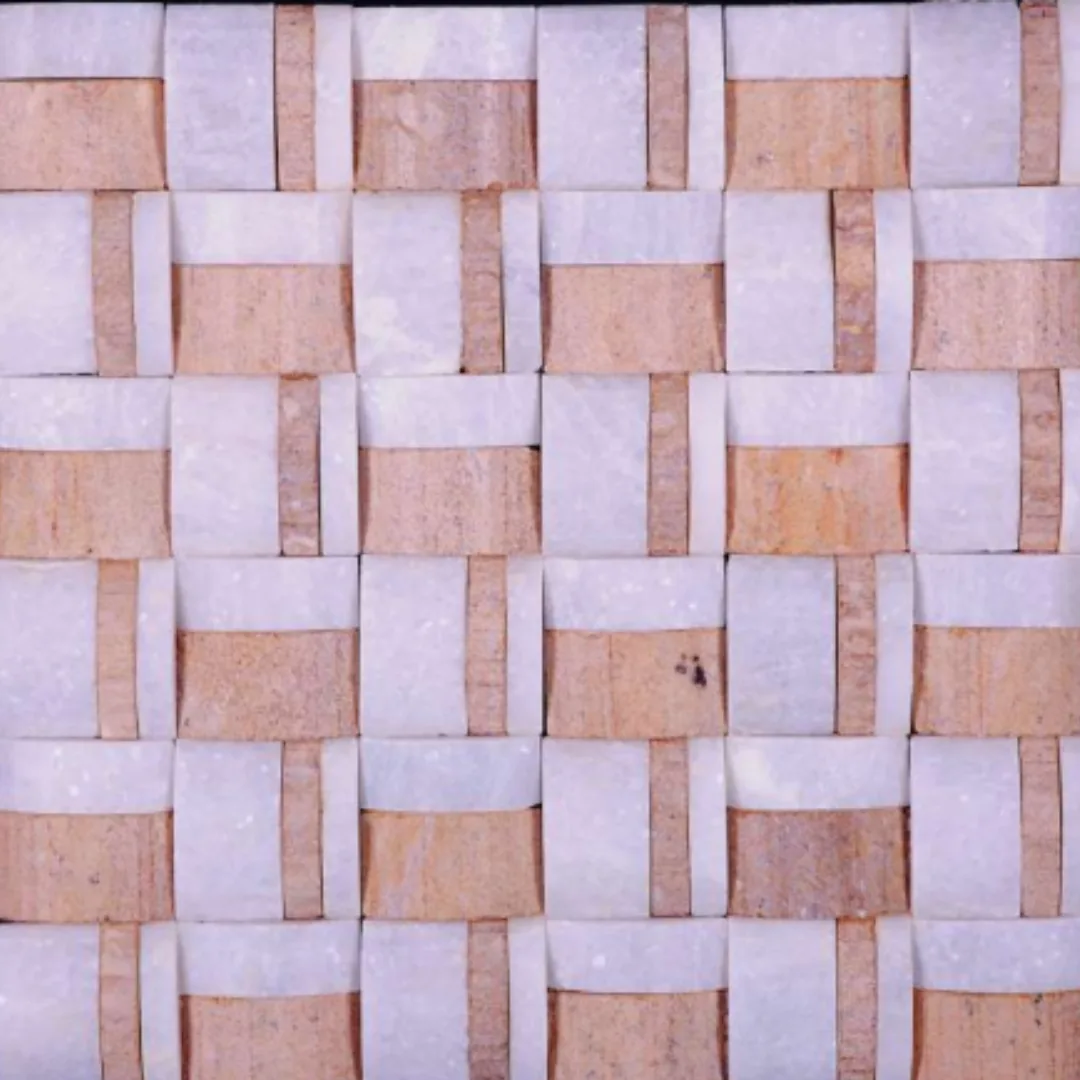
| Natural stone | 40 | Gate pillars and the stretch either side of the gate |
| Vitrified | 28 | Modern houses, long flat walls with few breaks |
| Brick pattern | 16 | Older-style or garden-facing compounds |
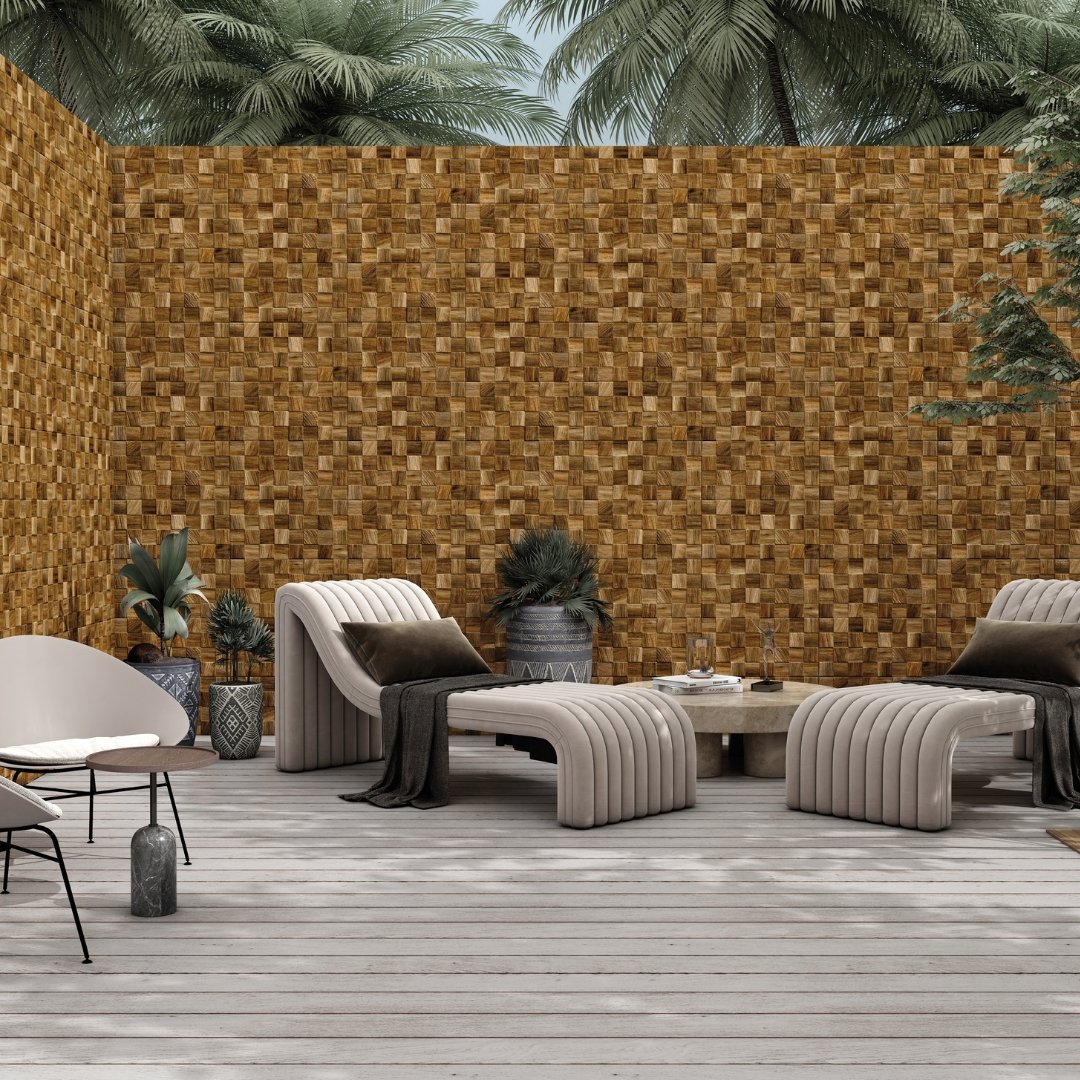
| Wooden | 6 | A small panel by the gate or nameplate, never a full wall |
| Travertine | 1 | Pillars, if it suits the house |
- Size. 77 designs are 300x600 mm, the practical size for a compound wall: light enough to hold well and easy to cut around a pillar. 28 are 600x1200 mm, three are narrow 20x120 strips and one is 300x300 mm. The rest are sized on enquiry.
- Finish. 103 designs are matt and 42 carry a stone finish. No gloss, which is right for an outdoor wall.
- Brand. 144 of the 149 are Exotica, with three from Morson and one from Sonet.
- Material. Our listings show 58 designs as ceramic, 44 as vitrified and 39 as stone. Check the material of the specific design, for the reason given under fixing below.
To put names to that: the brick pattern range includes Fort Red, Fort Ocre and Fort Almond, all 300x600 matt. Stone pattern includes Gravio Negro, Marfil and Blanco, the Fire Stone series in Noce, Negro and Gray, and Coston in Negro, Marfil and Arena. On the vitrified side, Morson's Jaipur Frame is 600x1200 matt.
Boundary wall tiles design: pick by exposure, then by looks
Before choosing a colour, walk around the wall and note which face gets afternoon sun, which sits in shade under a tree, and where water lands on it.
The road-facing side
This face gets traffic dust, splash from passing vehicles in the monsoon, and full sun on many plots. Mid-tone stone pattern tiles are the safest buy. Very light tiles show the red mud splash line within one season, and very dark ones run hot and show dried water marks. Coston Arena or Gravio Marfil sit in the forgiving middle.
Shaded and inside faces
Any stretch under a tree or behind a hedge stays damp long after the rain stops, and that is where algae starts. Pick a flatter face there, since deep stone textures and recessed brick joints hold moisture and dirt. The inside face of the wall can usually stay in painted plaster: it often has a garden bed or drain against it, and tiling it adds cost for little benefit.
The top of the wall decides whether the tiles last
If we could get customers to spend on one part of a boundary wall, it would be the top. Rain that sits on a flat wall top soaks into the core of the wall, behind the tiles, and comes out later as stains, loose tiles and white salt deposits.
- Use a proper coping. The top should slope so water runs off, and overhang both faces slightly with a drip groove underneath, so water drops clear instead of running down the tile face.
- Never finish the top with a tile laid flat. A flat tile with a grout joint along each edge lets water straight in behind the face tiles.
- We do not sell coping stones. Granite or precast concrete coping from your mason or a stone supplier is the usual route. Fix it first, then tile up underneath so the tile tucks in below the overhang.
- Treat pillar caps the same way. Slope them, overhang them, and seal around any lamp fitting.
Efflorescence, algae and the white marks that are neither
Efflorescence
Efflorescence is the white, powdery deposit on grout lines and tile edges. Water moving through the brick, block and cement dissolves salts and leaves them on the surface as it evaporates. A boundary wall gets water from the top, both faces and the ground, so it is more prone to this than the house. Prevention is mostly structural: a damp-proof course at plinth level, a proper coping, plaster dried out fully before tiling, and no soil heaped against the tiled face.
Algae
Green or black streaks on shaded faces, worst after the monsoon. It is biological, not a tile defect. A soft brush wash before and after the rains keeps it down, and trimming the hedge so the wall can dry does more than any cleaning product.
Hard water spots
Plenty of Bengaluru homes water the garden with borewell water, and a sprinkler that hits the compound wall leaves chalky spots as it dries. The fix is to turn the sprinkler, not to retile.
Gate pillars and the entrance stretch
- Decide the corner detail before ordering. Corners can be mitred, butted or finished with an edge trim. Mitres look best but need a skilled tiler.
- Fix gate hinges into the pillar core, not the tile. A heavy gate swinging daily cracks tiles around hinge plates anchored only through the cladding. Set the plates or anchor bolts before tiling.
- Run every cable first. Gate lights, video doorbell, intercom and gate motor all need conduits. Chasing a tiled pillar later means breaking tiles you may not be able to match.
- Keep wood to one panel. A wooden-look panel around the nameplate, using something like Heart Wood Pizarra, works on a stone wall. A whole pillar of it does not.
Matching the boundary wall to the house front
The wall and the house are seen together from the street, so they should look related, not identical.
- Repeat one element. If the house has a stone pattern base, use the same tile on the gate pillars and paint the wall between them. If the house is painted, the compound wall can carry the texture.
- Stay in one colour temperature. A warm beige house with a cool grey wall looks like two different plots.
- Go darker at the bottom. The base takes mud splash every monsoon, so a darker band there, or a darker tile overall than the house, stays clean longer.
- Check community rules. Some gated villa associations control the finish of compound walls facing the internal road. Ask before ordering.
If the wall frames a driveway, choose the floor and wall tiles together. Our tiles design for parking guide covers the driveway, and the outdoor floor tiles guide covers grip and drainage outside.
Fixing method: where boundary walls fail
Exterior cladding fails at the bond far more often than at the tile.
- Let the plaster cure and dry, ideally through a dry spell. Tiling onto fresh plaster traps moisture and salts behind the tile.
- Use an exterior-grade, polymer-modified adhesive. Plain cement mortar and indoor adhesive are the usual reasons tiles drop off after a couple of monsoons.
- Get full coverage. Spot fixing with a few dabs leaves voids where water collects. Ask for a notched trowel on the wall and back-buttering on the tile.
- Carry the wall's movement joints through with a flexible sealant rather than grouting over them.
- Use an exterior grout, polymer-modified or epoxy. White cement is not grout.
- Take care with heavy pieces. For natural stone or 600x1200 mm tiles high up, ask your contractor whether mechanical support is needed alongside adhesive.
On material, our vitrified versus ceramic guide explains why lower water absorption matters outdoors. For the most exposed faces, the road side and the top course, we would rather you chose a vitrified or stone design. Ceramic designs can work on sheltered stretches, but ask us about the specific design before committing.
Common mistakes
- Tiling before the coping is fixed. The top then gets finished with whatever is left, usually a flat tile.
- Tiling down into the soil. Stop the tile on a solid plinth above ground level.
- Light ivory on a road-facing wall. It looks lovely for one season.
- Three textures on one wall. One texture and one accent at most.
- Ordering exactly the measured area. Pillars and corners waste more tile than a flat wall, and a later batch may not match in shade.
Bring a photo of your house front and the length and height of the compound wall to our BTM Layout showroom. Call ahead with the designs you have shortlisted from the stone pattern and brick pattern pages, and we will work out quantities, wastage and the price for your wall.
Frequently asked questions
Which tiles are best for a boundary wall?
Matt stone pattern tiles in a mid tone suit most compound walls, because they hide mud splash, dust and dried water marks better than very light or very dark tiles. For the most exposed road-facing faces, choose a vitrified or stone design over ceramic, and keep wooden-look tiles for small panels near the gate.
What size tile is best for a compound wall?
300x600 mm is the practical choice for most boundary walls. The pieces are light enough to hold well with adhesive, easy to cut around pillars and gates, and the size more than half of our elevation range comes in. Larger 600x1200 mm tiles suit long, flat walls with few breaks but need more care during fixing.
Why do white patches appear on boundary wall tiles?
Usually it is efflorescence, where water passing through the wall dissolves salts from the brick and cement and leaves them on the surface as it dries. Boundary walls get water from the top, both faces and the ground. A sloped coping, a damp-proof course and fully cured plaster before tiling prevent most of it.
How do I stop algae on a compound wall?
Algae grows where the wall stays damp, usually on shaded stretches under trees or behind hedges. Trim the planting back so the wall can dry, choose a flatter tile face for those sections, and wash with a soft brush before and after the monsoon. It is a moisture problem, so cleaning alone will not stop it returning.
What should go on top of a tiled boundary wall?
A sloped coping that overhangs both faces with a drip groove underneath, usually granite or precast concrete. It sends rainwater clear of the tiled face instead of letting it soak into the wall. Fix the coping before tiling so the tiles tuck in underneath, and never finish the top with a tile laid flat.
How much do boundary wall tiles cost?
All 149 of our elevation designs are quoted on request, because the price depends on the design, the quantity and the wall. The tile is often not the biggest cost on an exterior job, since adhesive, labour, coping and cutting waste add up quickly. Bring your wall measurements and we will price the full quantity.