04 November 2026
Outdoor Floor Tiles: Balcony, Terrace and Parking Guide

Outdoor floor tiles have a harder life than anything else in the house. A balcony in Bengaluru gets the full afternoon sun from March to May, then four months of monsoon rain, then a layer of fine dust that turns to paste the first time it drizzles. A parking floor gets all of that plus a car turning on it twice a day.
So choosing outdoor floor tiles is mostly about grip, water and load, and only then about pattern. This guide covers what to check on the tile itself, how the area changes the choice, and what our own outdoor range looks like, including the parts of it we would not put in certain places.
For context: we carry 225 outdoor floor tile designs, 164 for balconies and terraces and 61 for parking. 207 of them are matt, and 400x400 mm is by some distance the most common size.
What makes a tile suitable for outdoor floors
Three properties matter more than the design.
Grip when wet
Outdoor floors are walked on wet, often with chappals or bare feet, and a glossy surface with a film of rainwater on it is genuinely dangerous. The tile industry measures it as a coefficient of friction, and the Tile Council of North America explains how the wet dynamic coefficient of friction is tested and why older dry tests were dropped. Under that American standard, 0.42 wet is the minimum for level indoor floors expected to get wet. Outdoor floors and slopes need more than that, not less.
In India you will more often see R ratings (R9 to R13) printed on boxes, from a German ramp test. Higher means more grip. Either way, ask for the figure rather than accepting the word "anti-skid" on its own. Our anti-skid tiles safety guide explains both ratings in more detail.
Water absorption
A tile that soaks up water outdoors will stain, grow algae in the pores and, on a sun-baked terrace, can craze as it heats and cools. Vitrified tiles are fired until the body is glass-like and absorb very little water, under 0.5% by weight for the fully vitrified class. That is why 212 of our 225 outdoor designs are vitrified. The 7 ceramic ones are fine for a covered balcony, but we would not put ceramic on an open terrace or a parking slab.
Strength and thickness
Parking tiles take point loads from tyres. Smaller, thicker tiles handle this better than large thin ones, because each tile has less unsupported span. This is the main reason the 400x400 mm size dominates outdoor ranges, and why we would steer you away from a 600x1200 mm slab on a driveway.
Our outdoor floor tile range at a glance
Here is what we carry by area and style, with the prices we publish. 123 of the 225 designs have a listed price. The rest are quoted on request, usually because the price depends on the batch or the size you pick.
| Area | Style | Designs | In the showroom | Listed price (₹ per sq ft) |
| Balcony / terrace | Geometrical | 84 | 41 | 62 to 95 |
| Balcony / terrace | Plain and texture | 31 | 25 | 65 to 81 |
| Balcony / terrace | Wooden | 28 | 4 | 65 to 95 (4 priced) |
| Balcony / terrace | Moroccan | 21 | 10 | 65 to 95 |
| Parking | Geometrical | 48 | 31 | 65 to 95 |
| Parking | Plain and rustic | 8 | 7 | 65 to 81 |
| Parking | Moroccan | 4 | 4 | 67 to 81 |
| Parking | Marble and stone | 1 | 1 | 81 |
Across the whole outdoor range, listed prices run from ₹62 to ₹95 per sq ft, and the middle of most groups sits between ₹65 and ₹74. Small, tough matt tiles are simply not where the expensive tiles live. The main brands across the range are Morson (47 designs), Exotica (21) and Creanza (12).
On sizes: 106 designs come in 400x400 mm, 52 in 600x1200 mm, 20 in 600x600 mm, 16 in 500x500 mm, 11 in 100x1200 mm wood-look planks and 6 in 300x300 mm. Keep the large formats for covered balconies and sit-outs, not open parking.
Choosing outdoor floor tiles by area
Balconies
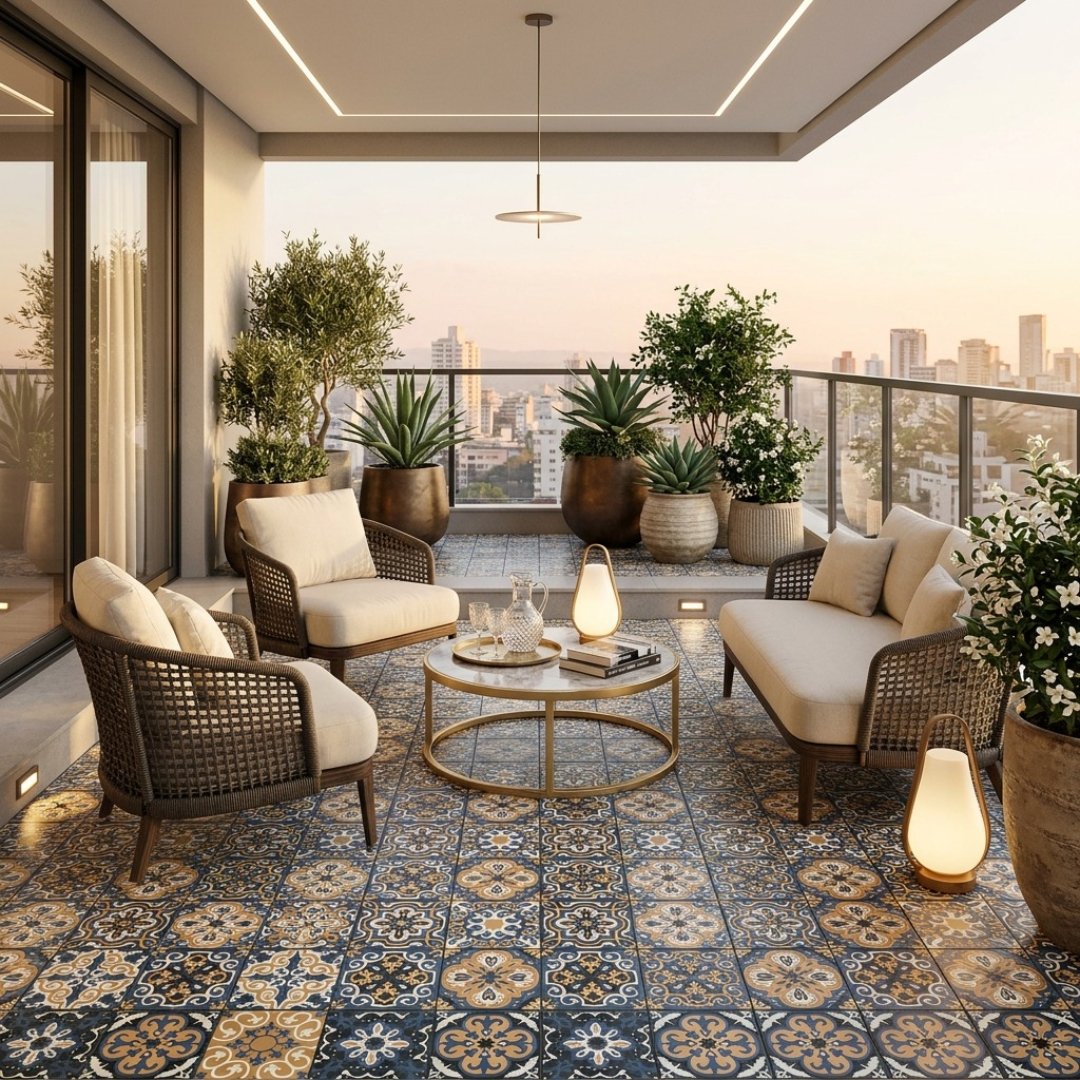
Most Bengaluru apartment balconies are small, partly covered and drain through one corner outlet. A matt tile in 400x400 or 600x600 mm suits them well. Geometrical and Moroccan patterns are popular because a balcony is small enough to carry a bold floor without it becoming tiring. Check your association rules before you start: many buildings insist that the balcony floor level and the drain outlet are not changed, which limits how thick your new bed can be. Our balcony tiles design guide covers floor and wall ideas for small balconies, and you can browse the full balcony and terrace floor tiles range online.
Open terraces
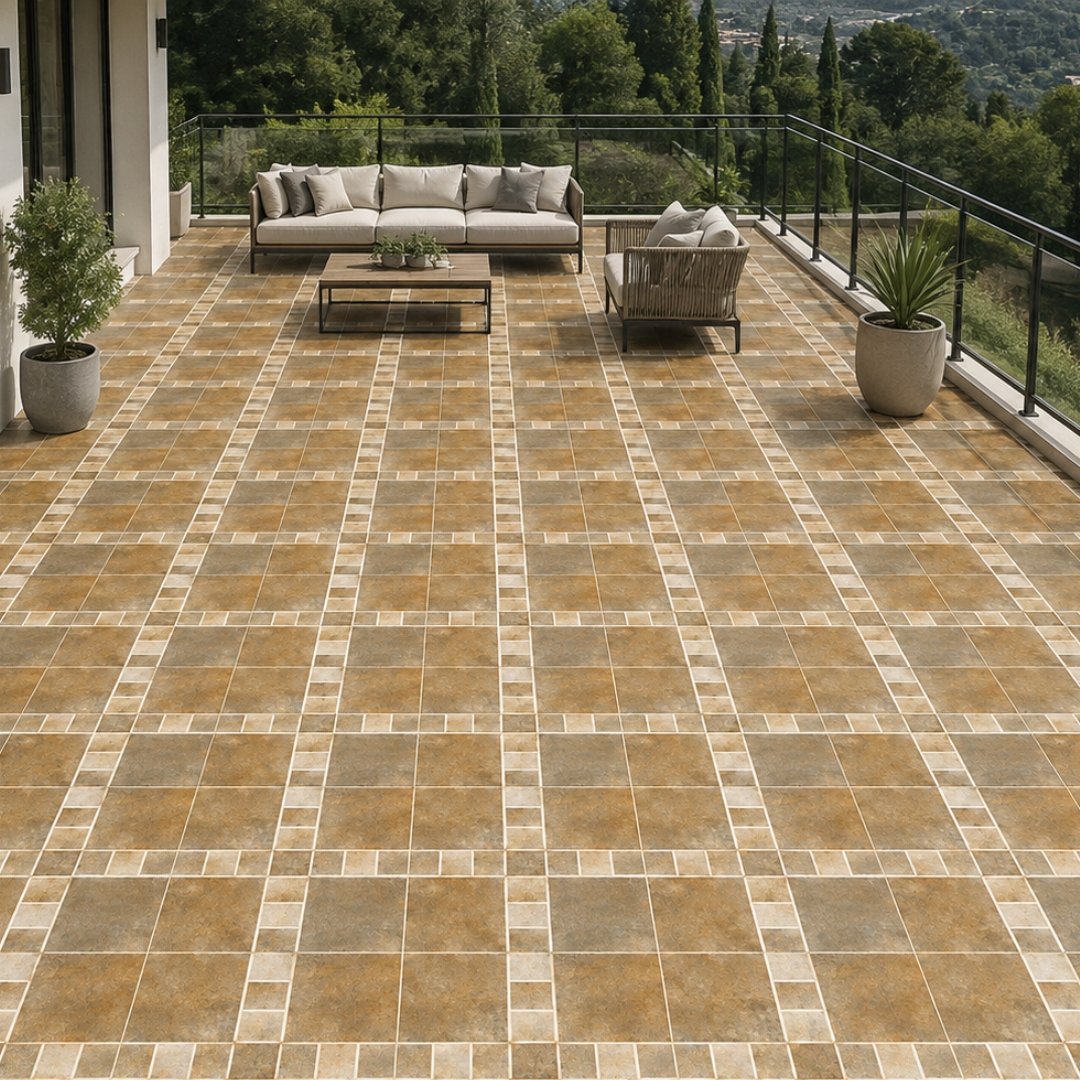
An open terrace is the toughest spot in the house for a tile. Full sun, open rain and more expansion than any indoor floor. Three things to insist on:
- A light colour. Dark tiles in full May sun get uncomfortably hot underfoot. Beige, ivory and light grey stay noticeably cooler.
- Movement joints. On a large terrace the tiler should leave flexible joints at intervals and along the parapet. Tiles laid tight wall to wall tend to lift after a hot spell.
- Waterproofing first. Tiles are not a waterproofing layer. Water gets through grout, so the slab needs its own treatment first, especially above a bedroom.
Parking and driveways
Here the load decides everything. Go for 400x400 mm vitrified, matt, with a full adhesive bed and no hollow spots under the tiles. A textured or rustic surface helps grip on a sloped driveway. Double charged tiles, where the design runs some depth into the tile rather than sitting only on the surface, are the best option where tyres turn in the same spot every day. Our sibling guide to double charged tiles explains how they are made, and tiles design for parking covers layout ideas. For the simplest, hardest-wearing look, the plain and rustic parking tiles are the group to start with.
What we would not do: lay glossy tiles, large 600x1200 mm slabs, or a wood-look plank on a parking floor.
Garden paths and sit-outs
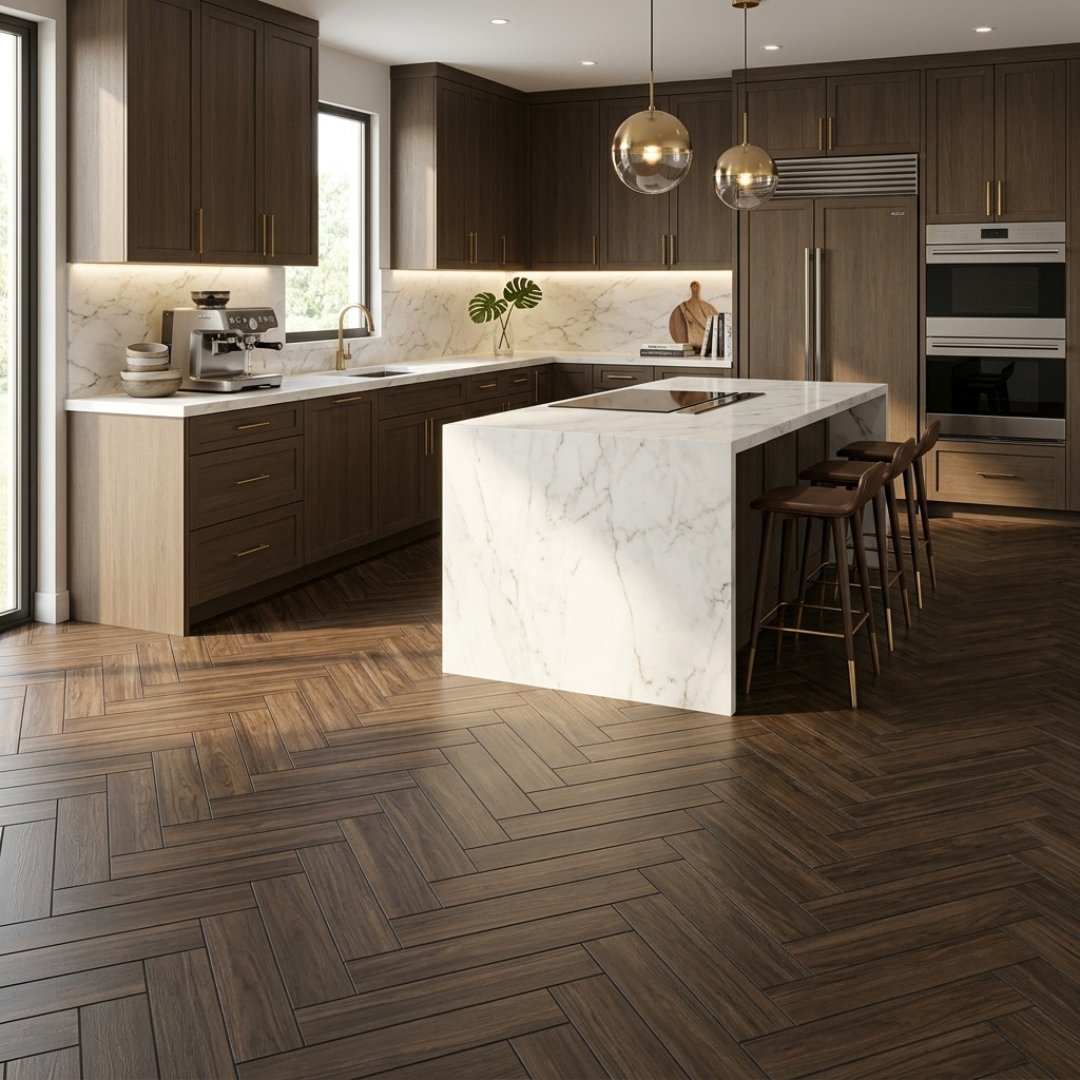
Ground-level paths sit on soil that moves after heavy rain, so a proper concrete base matters more than the tile. Then a textured matt surface in 400x400 or 600x600 mm works well. Wood-look tiles are popular for sit-outs and covered decks, giving a timber-deck look without termites or rotting boards. Our wooden balcony and terrace tiles are where to look, and the sibling post on wooden flooring tiles compares wood-look tile with real timber properly.
Outdoor steps
Steps are where people actually fall. Use a matt, textured tile on the tread and, ideally, a nosing or grooved edge so the front of each step is clearly visible and has extra grip. Our staircase tiles design guide covers treads, risers and anti-skid options.
Slope, drainage and algae
Standing water causes most outdoor problems: slips, algae, stained grout and damp on the ceiling below. Every outdoor floor needs a fall toward the drain, set in the screed before the tiles go down. The tile follows the screed, so a tile cannot fix a flat floor.
During the south-west monsoon, shaded balconies and north-facing terraces that never quite dry out will grow green algae in grout lines and on textured tiles. A few practical habits help:
- Ask for a grout that is suitable for wet outdoor areas, ideally epoxy on terraces, as it absorbs far less water than cement grout.
- Choose a mid-tone grout. White grout outdoors looks dirty within one season.
- Scrub textured tiles every few weeks during the monsoon with a stiff brush and a mild cleaner. Avoid strong acid cleaners, which attack the grout.
Bengaluru hard water also leaves white marks where plants are watered, and they show far more on dark tiles.
Matt, textured or glossy outside
The short answer is matt, and our range reflects that: 207 of 225 outdoor designs are matt. Another 9 are Shapetech 4D PRO, a structured surface with physical texture that you can feel underfoot. We do not recommend a glossy tile on any open outdoor floor. On a fully covered, dry balcony it is your call. The wider trade-offs are in our guide to matt vs glossy tiles.
Common mistakes with outdoor floor tiles
- Using leftover indoor tiles on the balcony. Polished living room tiles are the most common cause of balcony slips we hear about.
- No movement joints on a large terrace. The tiles will lift in the first hot summer.
- Dark tiles on an open, south or west-facing terrace. Too hot to walk on barefoot in the afternoon.
- Buying the exact quantity. Outdoor tiles get cut around drains, parapets and steps. Order extra, and keep a few spare from the same batch for future repairs.
Come to our BTM Layout showroom with a photo of the area, rough measurements and a note of whether it is covered or open. 123 of our outdoor designs are on display, so we can put a few on the floor, splash some water on them and let you feel the grip with your own feet before you decide.
Frequently asked questions
Which tiles are best for outdoor floors?
Matt vitrified tiles with a textured or anti-skid surface are the best general choice. They absorb very little water, resist staining and algae better than ceramic, and grip when wet. For parking, choose 400x400 mm tiles laid on a full adhesive bed. For terraces, pick light colours so the floor stays cooler in the sun.
What is the price of outdoor floor tiles?
Our listed outdoor floor tile prices run from ₹62 to ₹95 per sq ft, with most groups centred between ₹65 and ₹74. 123 of our 225 outdoor designs carry a listed price, and the rest are quoted on request. Budget separately for adhesive, grout, waterproofing and labour, which add to the tile cost.
Can I use glossy tiles on a balcony?
We would not recommend it on any balcony that gets rain or regular watering. A glossy surface with a thin film of water on it is a real slip risk. On a fully covered balcony that stays dry, it can work, but a matt tile is the safer choice and hides dust and water marks better too.
What size tile is best for parking areas?
400x400 mm is the most practical size for parking, and it is the most common size in our outdoor range. Smaller tiles handle the point load of a tyre better, follow the slope of a driveway more easily and are cheaper to replace if one gets damaged. Avoid large 600x1200 mm slabs where cars drive.
How do I stop algae growing on terrace tiles?
Make sure the floor slopes properly toward the drain so water does not stand. Use epoxy or a low-absorption grout, choose a mid-tone grout colour, and scrub textured tiles every few weeks during the monsoon with a stiff brush and a mild cleaner. Shaded, north-facing areas need the most attention.
Are wooden look tiles suitable for outdoors?
Yes, for covered balconies, sit-outs and terraces, as long as you pick a matt finish. They give the look of a timber deck without termites, warping or polishing. We carry 28 wood-look designs for balconies and terraces. We would not use them on a parking floor, where plank formats are not built for vehicle loads.
Do outdoor tiles need waterproofing underneath?
Yes, especially on terraces and balconies above a room. Tiles and grout are not waterproof as a system, and water seeps through grout lines over time. The slab should be waterproofed and given the correct slope before tiling. Fixing a leak later means lifting the tiles, which costs far more than doing it right first.