- 1. Marble-look hall floor tile designs
- 2. Wooden-look living room floor tiles
- 3. Geometric and Moroccan hall floor designs
- 4. Grey, white and neutral floor tile ideas
- 5. Stone-look and terrazzo floor designs
- 6. Small living room floor tiles design
- 7. Hall wall and floor tile combinations
- 8. Best sizes for small living rooms
- 9. How to choose the best living room floor tiles
- 10. Frequently asked questions
17 August 2026
Hall Floor Tiles Design: 20 Looks for Indian Living Rooms (2026)

The living room floor is the largest uninterrupted surface in most Indian homes (finish the edge properly with our skirting tiles guide), and the tile you pick sets the tone for everything else in the space, from furniture colour to curtain fabric. Getting your hall floor tiles design right matters because you will walk on this choice for the next 10 to 15 years. This guide covers 20 living room floor tiles design ideas organised by material, colour, and room size, all from the 8,000+ designs at our Bengaluru experience center.
Marble-look hall floor tile designs
Marble-look vitrified tiles remain the most popular living hall tiles design choice in India, and for good reason. They deliver the veined, polished look of natural marble without the staining, etching, or annual re-polishing that real stone demands.
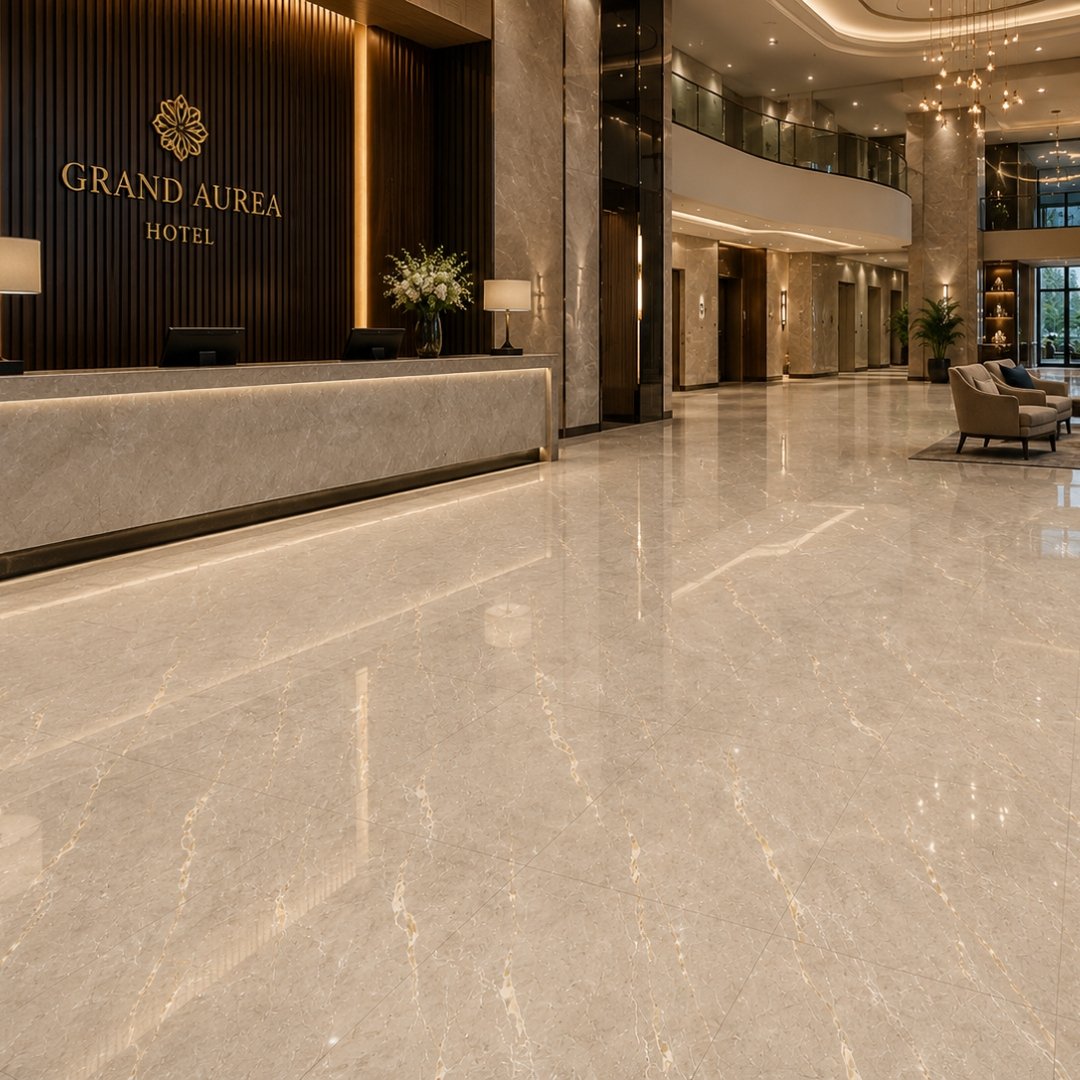
1. Statuario white with grey veining
The classic five-star-hotel floor. A large-format 600x1200 slab in Statuario finish makes even a 150 sq ft hall feel open and bright. Works with almost any wall colour and furniture style.
2. Carrara with soft blue-grey veins
Slightly warmer than Statuario, Carrara-look tiles suit homes with wooden furniture and warm lighting. The subtle vein pattern hides dust and footmarks better than a plain white tile.
3. Book-matched marble floor
Two large tiles mirrored so the veining forms a symmetrical V-pattern across the centre of the hall. This is a statement, and it works best in halls over 200 sq ft where the pattern has room to breathe.
4. Beige Botticino marble-look
For homeowners who follow Vastu colour guidelines for the living room, warm beige and cream tones are considered ideal. Botticino-look tiles bring that warmth without the fragility of real Italian marble.
Browse the full range of marble and stone-look floor tiles for the living area.
Wooden-look living room floor tiles
Wood-look tiles have grown fast in Bengaluru apartments, especially in open-plan living and dining layouts where homeowners want warmth without the termite risk, water sensitivity, or annual maintenance that real hardwood demands.
5. Teak-tone planks in a straight lay
The simplest wood-look option. Plank-format tiles (typically 200x1200) in a warm teak shade, laid parallel to the longest wall. It makes narrow halls feel wider and pairs well with white or off-white walls.
6. Herringbone pattern in oak tones
Laying wood-look planks at 45-degree angles in an interlocking V creates texture and movement that a straight lay cannot match. It reads as a designed floor rather than a tiled one.
7. Dark walnut for large halls
Deep brown walnut-tone planks ground a room and make lighter furniture stand out. Best in halls over 200 sq ft with good natural light, since dark floors can make small, dim rooms feel smaller.
See all wooden-look floor tiles for the living area.
Geometric and Moroccan hall floor designs
Pattern tiles turn the floor into a feature. They work best when the rest of the room stays quiet: plain walls, simple furniture, minimal rugs.
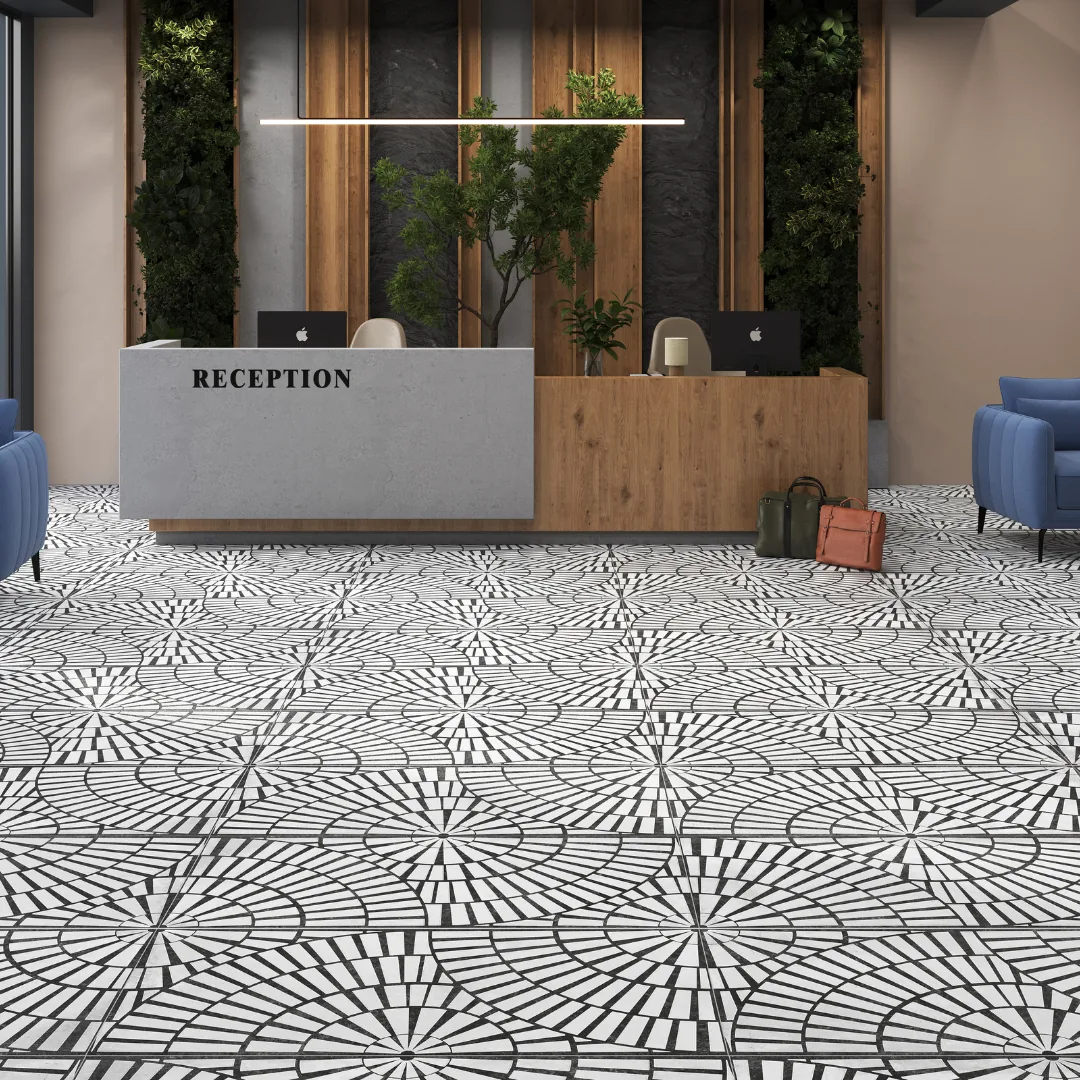
8. Bold geometric in grey and white
Large-scale geometric patterns in neutral tones add visual interest without overwhelming the room. A single geometric floor tile can replace the need for a statement rug entirely.
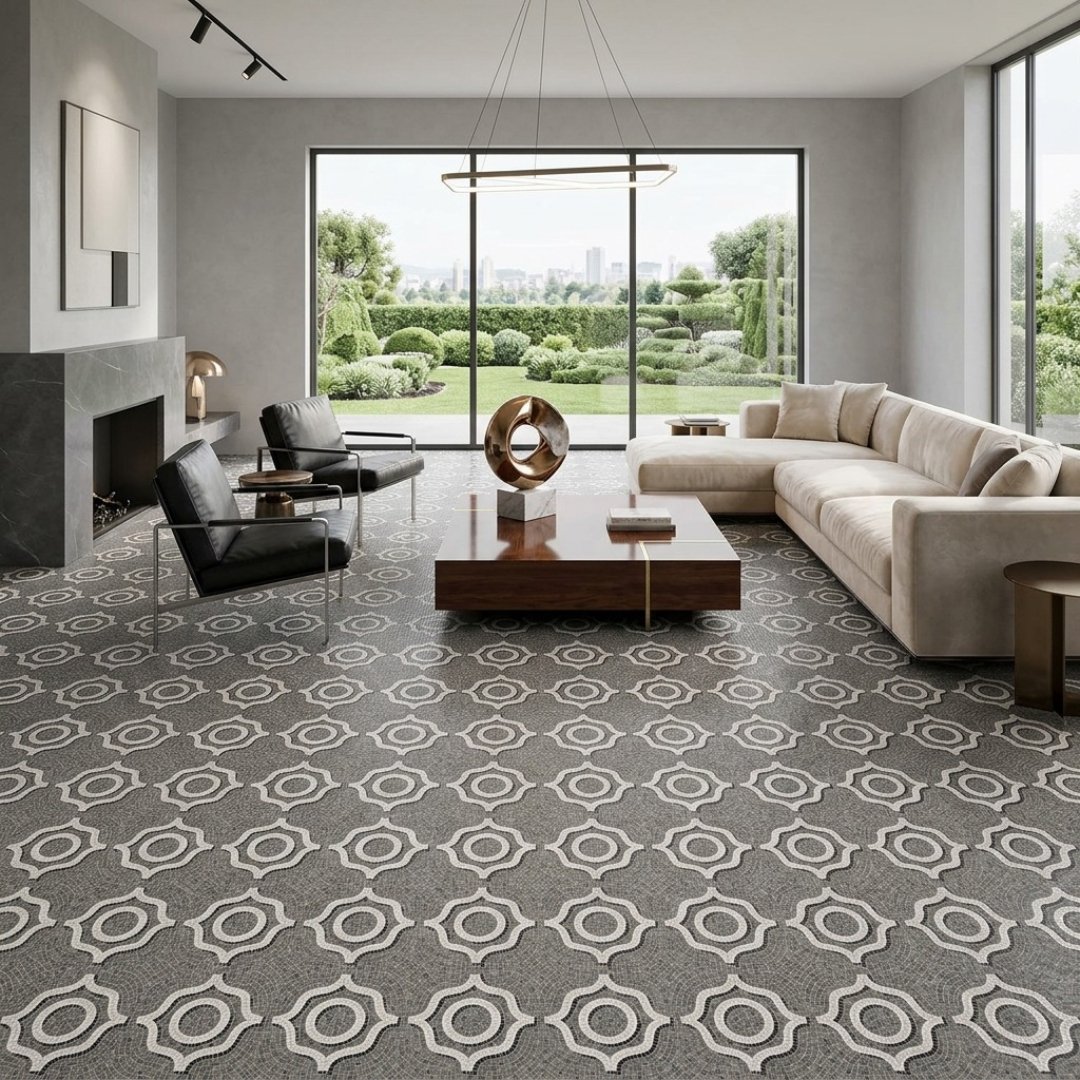
9. Moroccan for a heritage or boho feel
Blue-and-white or grey-and-cream Moroccan floor tiles suit homes with a mix of traditional and modern furniture. They age well visually and hide wear better than plain surfaces.
10. Hexagon tiles in the transition zone
Where the hall meets the dining area or corridor, a strip of hexagonal tiles creates a natural visual boundary without a physical divider. Particularly useful in open-plan 2BHK and 3BHK apartments.
Explore geometric floor tiles for the living area.
Grey, white and neutral floor tile ideas
Colour choice drives how a room feels more than pattern or size. Our guide to the best tiles colour for living room floors goes deeper, with Vastu tips by direction. Here is what works and why.
11. Light grey for modern minimalism
Grey is the most versatile modern neutral. It pairs with every furniture finish (wooden, metal, upholstered), hides dust and footmarks, and never dates. A satin or matte finish in light grey is the safest modern living hall floor tiles design for most Indian apartments.
12. Warm ivory for classic Indian homes
If your home leans traditional, with dark wood furniture, brass accents, or rich curtain fabrics, a warm ivory or cream floor tile provides the right backdrop without competing.
13. Charcoal for dramatic contrast
Dark charcoal or anthracite floors make a strong statement. They work in large, well-lit halls with lighter walls and furniture. Not recommended for halls under 150 sq ft or rooms with limited natural light.
14. White for small and dim halls
A glossy or satin white floor reflects every bit of available light, making a compact living room feel more open. Pair with light-coloured walls and avoid dark grout to keep the effect clean.
See plain and textured floor tiles for neutral options.
Stone-look and terrazzo floor designs
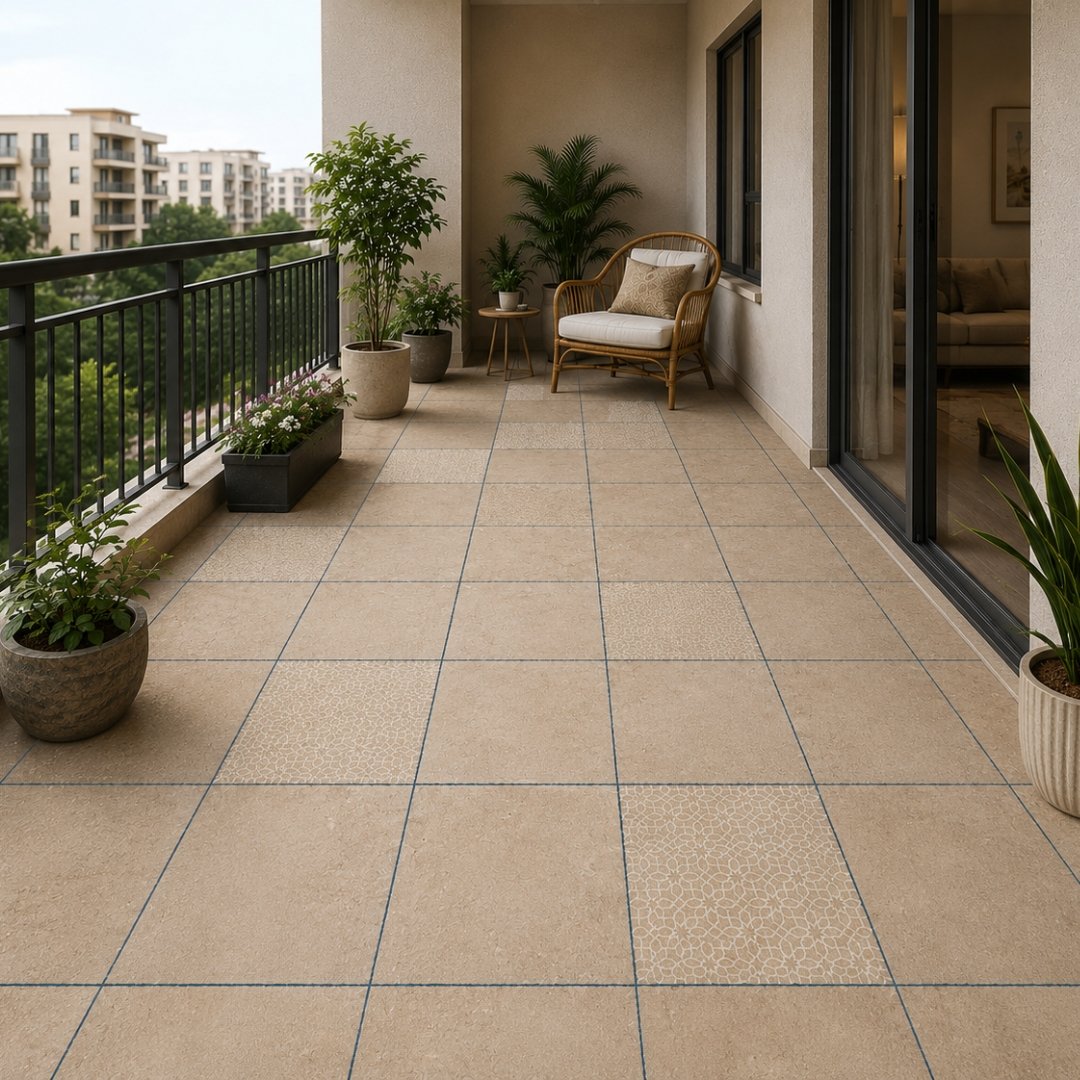
15. Travertine in warm honey tones
Travertine-look vitrified tiles bring a Mediterranean warmth that suits Indian homes with natural light and earthy interiors. The natural tonal variation in each tile means no two square feet look identical.
16. Terrazzo for retro-modern living rooms
Speckled terrazzo-look tiles hide dust and foot traffic marks better than almost any other finish. The multicolour chip pattern suits both pastel and bold furniture schemes and has genuinely come back into designer projects over the last two years.
Small living room floor tiles design
Most 2BHK apartments in Bengaluru have living rooms between 100 and 180 sq ft. The right small living room floor tiles design can make that space feel noticeably larger.
17. Large-format tiles, fewer joints
A 600x1200 (4x2 ft) tile on the floor means fewer grout lines, and fewer grout lines mean the eye reads one continuous surface. This is the single most effective trick for making a compact hall feel bigger.
18. Same tile into the dining area
If the living and dining areas share an open layout, continuing the same floor tile across both removes the visual "break" between zones. The floor reads as one large space instead of two small ones.
Hall wall and floor tile combinations
The living room is not just about the floor. Getting the hall tiles design wall and floor to work together is what makes a room feel finished rather than assembled.
19. Highlighter accent wall paired with a neutral floor
One highlighter wall behind the TV unit or sofa, with a plain marble-look or grey floor tile. The 60-30-10 rule applies: 60% quiet base (floor and three walls), 30% supporting tone, 10% accent (the feature wall).
20. Stone-look wall behind the TV with matching floor
A stone pattern wall tile behind the TV paired with a similar-toned stone-look floor creates a grounded, cohesive look. Keep the other three walls in a light neutral so the stone feature doesn't dominate.
Best sizes for small living rooms
600x600 remains the standard, but 600x1200 is now the better choice wherever walls are reasonably even. Avoid small-format tiles (300x300 or mosaic) on living room floors. They create too many grout lines and make the space feel busier and smaller.
How to choose the best living room floor tiles
Fix the size first
600x1200 for modern, minimal grout lines. 600x600 for standard layouts. Wood-look planks (200x1200) if you want the hardwood aesthetic.
Pick colour by room size and light
Light grey, ivory, or white for small or dim halls. Charcoal, dark wood, or bold patterns only in large, well-lit rooms.
Choose one statement, keep the rest quiet
A patterned floor means plain walls. A bold accent wall means a neutral floor. Both at once creates visual noise.
Check the finish for daily life
Matte and satin finishes show less dust and fewer footmarks than high-gloss. For a family living room with daily traffic, matte vitrified is the practical winner. Not sure between vitrified and ceramic? Read our vitrified vs ceramic tiles comparison.
Order samples before committing
Tiles look different under showroom lights than in your living room at 7pm with warm LEDs. Take samples home and check them in your actual space. Our team will help you pick the right ones to test.
Frequently asked questions
Which floor tile design is best for Indian living rooms?
Marble-look vitrified tiles in light grey, ivory, or Statuario white are the most popular and the safest long-term choice. They suit most furniture styles, hide daily wear well, and work across a wide budget range.
What size tile is best for a hall floor ?
600x1200 (4x2 ft) is the current standard for modern living rooms. It creates fewer grout lines than 600x600 and makes rooms feel larger. For wood-look floors, 200x1200 planks are the go-to format.
Are wooden-look tiles good for living rooms?
Yes. Wood-look vitrified tiles give you the warmth of hardwood without the termite risk, water damage, or annual polishing. They work particularly well in open-plan living and dining areas where you want visual continuity.
What colour floor tile makes a living room look bigger?
Light colours (white, ivory, light grey) in a satin or gloss finish reflect more light and make compact rooms feel more open. Using the same tile across the hall and dining area without a break adds to the effect.
How do I match wall and floor tiles in the hall?
Pick one as the statement and keep the other quiet. A patterned or bold floor pairs with plain walls. A highlighter accent wall pairs with a neutral floor. The 60-30-10 colour rule keeps the room balanced.