- 1. What terrazzo is
- 2. Where we stock terrazzo
- 3. Where terrazzo earns its place
- 4. What terrazzo costs compared to plain tile
- 5. Terrazzo scale: fine speckle versus bold chip
- 6. Pairing terrazzo with the rest of the room
- 7. Cleaning and maintenance
- 8. Common mistakes
- 9. How to choose
- 10. Frequently asked questions
04 October 2026
Terrazzo Tiles: Looks, Cost and Where to Use Them

Terrazzo disappeared from Indian homes for about two decades, written off as an old building material, and has come back as a design choice people pay extra for. The speckled surface that used to be poured in place on old verandas is now a printed or moulded finish on a vitrified tile, and it solves a genuine problem: it hides mess better than almost any flat colour.
This guide covers what terrazzo actually looks like on a modern tile, what it costs, and where it earns its place in an Indian home.
What terrazzo is
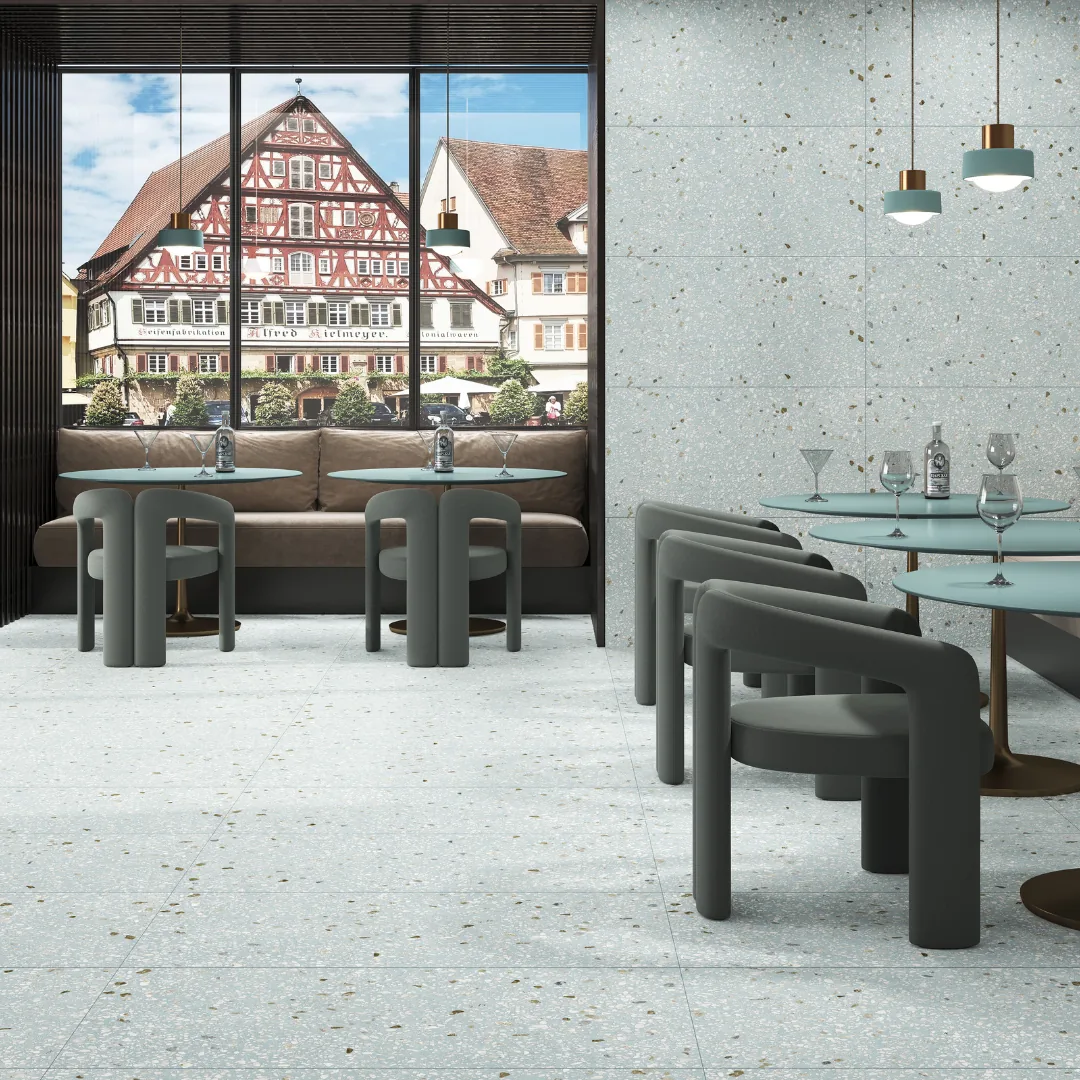
Terrazzo is traditionally a composite surface made from chips of marble, quartz or glass set in cement or resin and polished flat, so the finished floor is flecked with colour rather than a single flat tone. The terrazzo tiles sold today are a printed or digitally reproduced version of that look on a standard ceramic or vitrified body, which means you get the appearance without the on-site pouring and curing that real terrazzo needs.
This matters for buyers to understand upfront: a terrazzo tile is not a different material from the ceramic or vitrified tiles you already know, it is a surface pattern on the same bodies, so the usual rules for where ceramic versus vitrified belongs still apply.
Where we stock terrazzo
Our terrazzo range sits in wall tiles, across three rooms:
If you are picturing a terrazzo floor the way older buildings used it, know that our range is wall-focused. For floors, our marble and stone-look ranges, covered in the vitrified vs ceramic tiles guide, are the closer match to what a terrazzo-style floor would need.
Where terrazzo earns its place
Kitchen backsplash
This is where terrazzo genuinely outperforms a plain tile. A backsplash takes oil spatter, turmeric and water daily, and a speckled surface hides all three between cleans far better than a flat white or cream tile does.
Bathroom accent wall
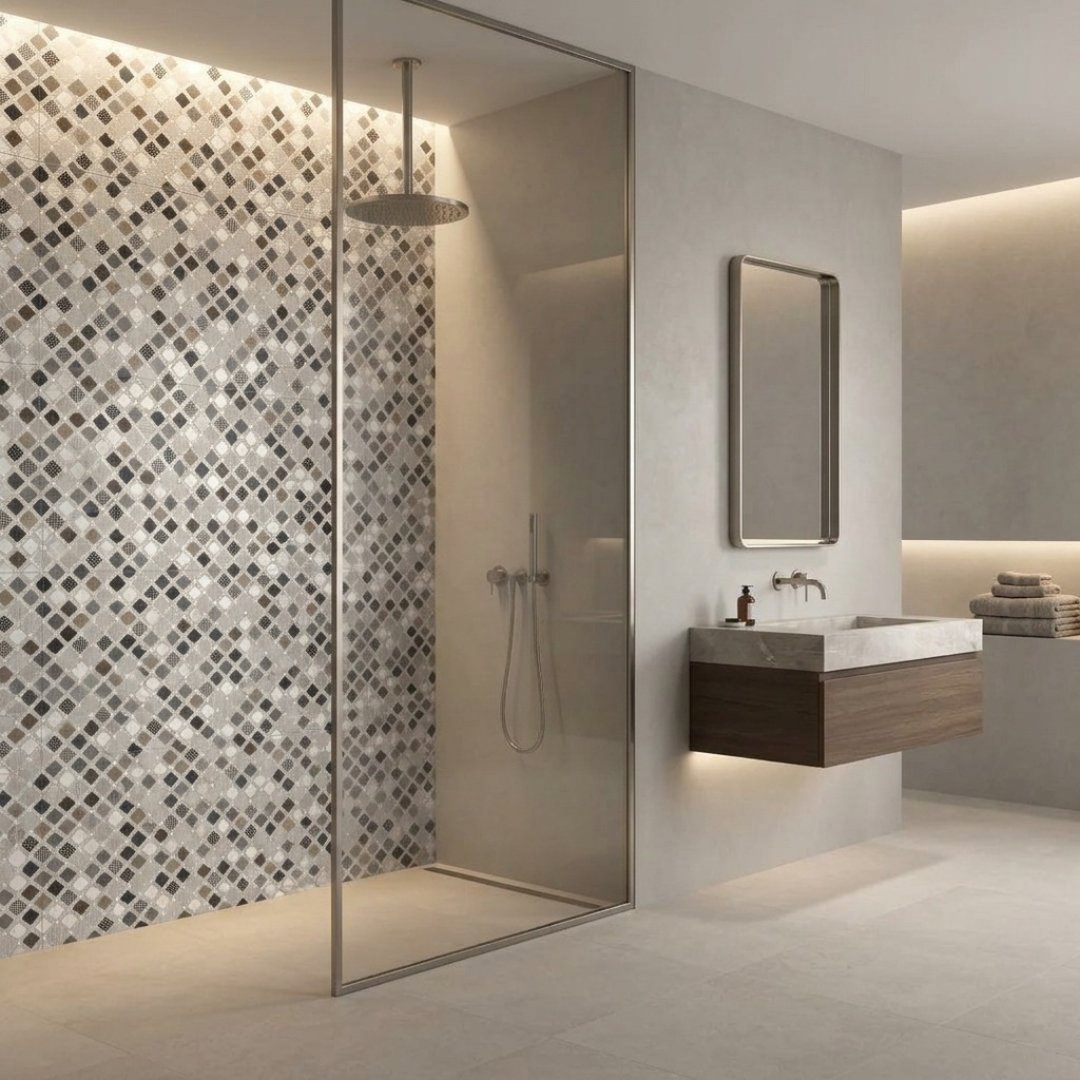
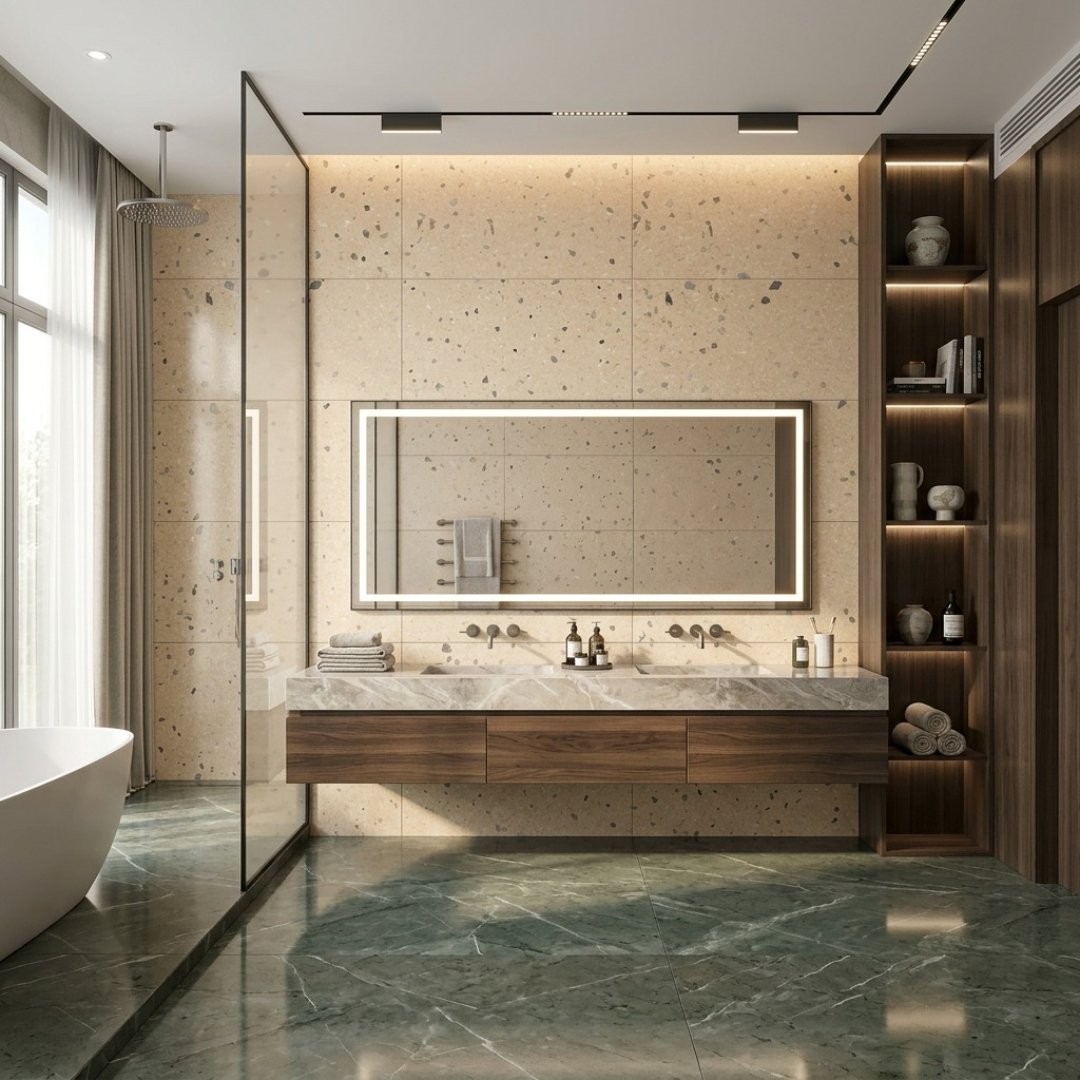
A single terrazzo wall, rather than the whole bathroom, gives the room texture without the room feeling busy. It pairs well with plain tile on the remaining walls.
Living room feature wall
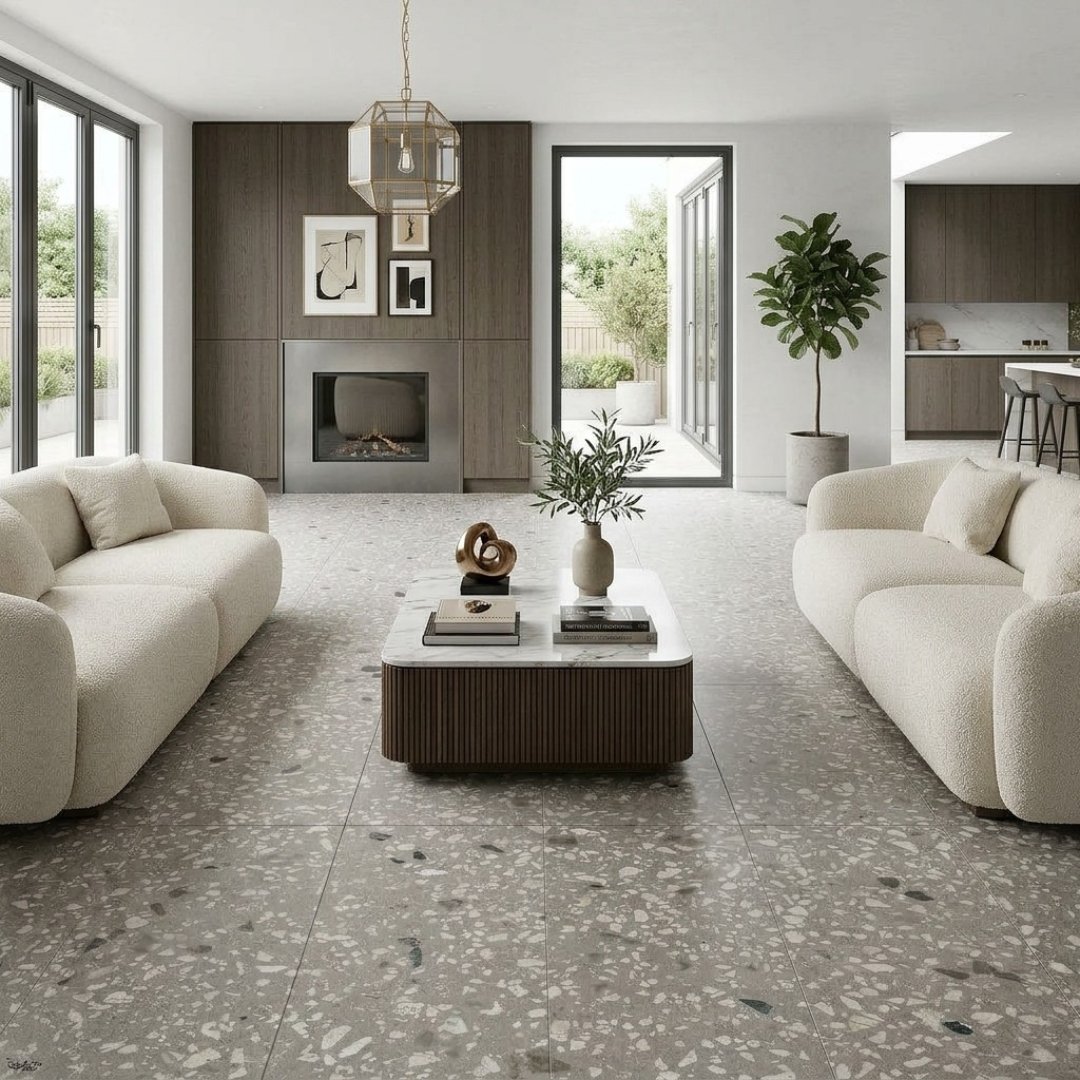
Terrazzo in a muted palette, grey or beige flecked with darker tone, works as a feature wall behind a console or TV unit, where it reads as considered rather than decorative.
What terrazzo costs compared to plain tile
Terrazzo-finish wall tiles sit in the mid-range of our wall tile pricing, above plain and highlighter finishes and generally below large-format marble slabs. Because wall tile pricing depends on the specific design and batch, we confirm the exact rate once you have a design in mind, but as a rule of thumb, budget similarly to a mid-range highlighter tile rather than a premium import.
Terrazzo scale: fine speckle versus bold chip
| Scale | Reads as | Best for |
| Fine, dense speckle | Subtle texture | Larger walls, where a bold version would be too much |
| Medium chip | Clear terrazzo character | Backsplashes, feature walls |
| Large, bold chip | Statement finish | Small accent areas, one wall only |
As with any patterned finish, the larger and bolder the chip, the smaller the area it should cover. A whole kitchen in bold-chip terrazzo competes with the cabinetry for attention. A backsplash strip in the same tile frames the cooking zone instead.
Pairing terrazzo with the rest of the room
- Pick a terrazzo colourway that includes a tone already in your counter, cabinet or floor, so the new surface ties into what exists rather than introducing a fourth colour.
- Keep the grout close to the base colour of the terrazzo rather than a contrasting grout, since contrast grout turns the speckle into a grid.
- Use a single terrazzo design per room. Mixing two different terrazzo patterns in one space reads as clutter rather than texture.
Cleaning and maintenance
The glaze itself is what does the work here: a ceramic glaze is a thin, fused layer of glass on the tile surface, which is why it resists stains without special sealing. A terrazzo-finish tile is glazed ceramic or vitrified, so it cleans the same way as any other glazed tile: a damp cloth and a non-abrasive cleaner. There is no special sealing needed the way real poured terrazzo sometimes requires, since the speckle here is a printed or moulded surface pattern on a standard glaze, not an exposed aggregate.
Common mistakes
- Expecting a floor product. Our terrazzo range is wall tile. For a terrazzo-style floor, look at our marble and stone-look floor ranges instead.
- Tiling an entire room in bold-chip terrazzo. Keep bold versions to a single wall or backsplash strip.
- Choosing colour from a small sample chip. Terrazzo patterns look different at full scale than on a 4-inch sample. Ask to see a larger board if one is available.
- Pairing with a busy countertop. Terrazzo already carries visual texture, so a patterned or heavily veined counter next to it usually competes rather than complements.
How to choose
- Decide the one zone: backsplash, accent wall or feature wall.
- Choose a colourway that pulls from an existing tone in the room.
- Pick the chip scale to match the size of that zone.
- Confirm the current rate for your specific design.
- See the tile under your own lighting before ordering the full quantity.
Visit our BTM Layout showroom to see the terrazzo range in person. The speckle pattern is one of the finishes that photographs differently from how it looks on the floor, so it is worth seeing before you commit.
Frequently asked questions
Is terrazzo tile the same as real terrazzo flooring?
No. Traditional terrazzo is a poured composite of marble or quartz chips set in cement or resin. A terrazzo tile today is a printed or moulded pattern on a standard ceramic or vitrified tile, giving the same speckled look without on-site pouring and curing.
Where should terrazzo tiles be used?
Kitchen backsplashes, bathroom accent walls and living room feature walls are where terrazzo works best. It hides daily mess, oil and water marks better than a plain tile, which is why the backsplash is its strongest use.
Do you sell terrazzo floor tiles?
Our terrazzo range is wall tile, across bathroom, kitchen and living area. For a terrazzo-style floor look, our marble and stone-look floor tiles are the closer match, covered in our vitrified vs ceramic tiles guide.
Is terrazzo tile expensive?
It sits in the mid-range of our wall tile pricing, above plain finishes and generally below premium marble slabs. Exact pricing depends on the specific design, so we confirm the rate once you have a pattern in mind.
Does terrazzo tile need sealing like real terrazzo floors?
No. The terrazzo look on our tiles is a glazed surface pattern, which cleans the same way as any other glazed ceramic or vitrified tile. Real poured terrazzo sometimes needs sealing because it exposes the aggregate directly, which does not apply here.
Can terrazzo tiles be used across a whole room?
You can, with a fine or dense speckle pattern that reads as subtle texture rather than a bold statement. A large, bold-chip terrazzo is better kept to one wall or a backsplash strip, since it competes for attention across a whole room.