05 October 2026
Elevation Tiles: Types, Finishes and What They Cost

Most elevation tile conversations start with a design photo and end with a number nobody expected. The photo shows a stone-look facade that looks simple enough. The quote includes scaffolding, a waterproof adhesive most contractors have never used, and expansion joints nobody mentioned at the start. None of that is hidden pricing. It is just what elevation tiling actually involves, and almost nobody explains it before the work starts.
This guide covers the types of elevation tiles available, what separates a cheap finish from a durable one, and what the job actually costs once everything is included, not just the tile.
The five types of elevation tile finish
We stock elevation tiles in five finish families, each suited to a different facade style.
| Finish | Look | Best for |
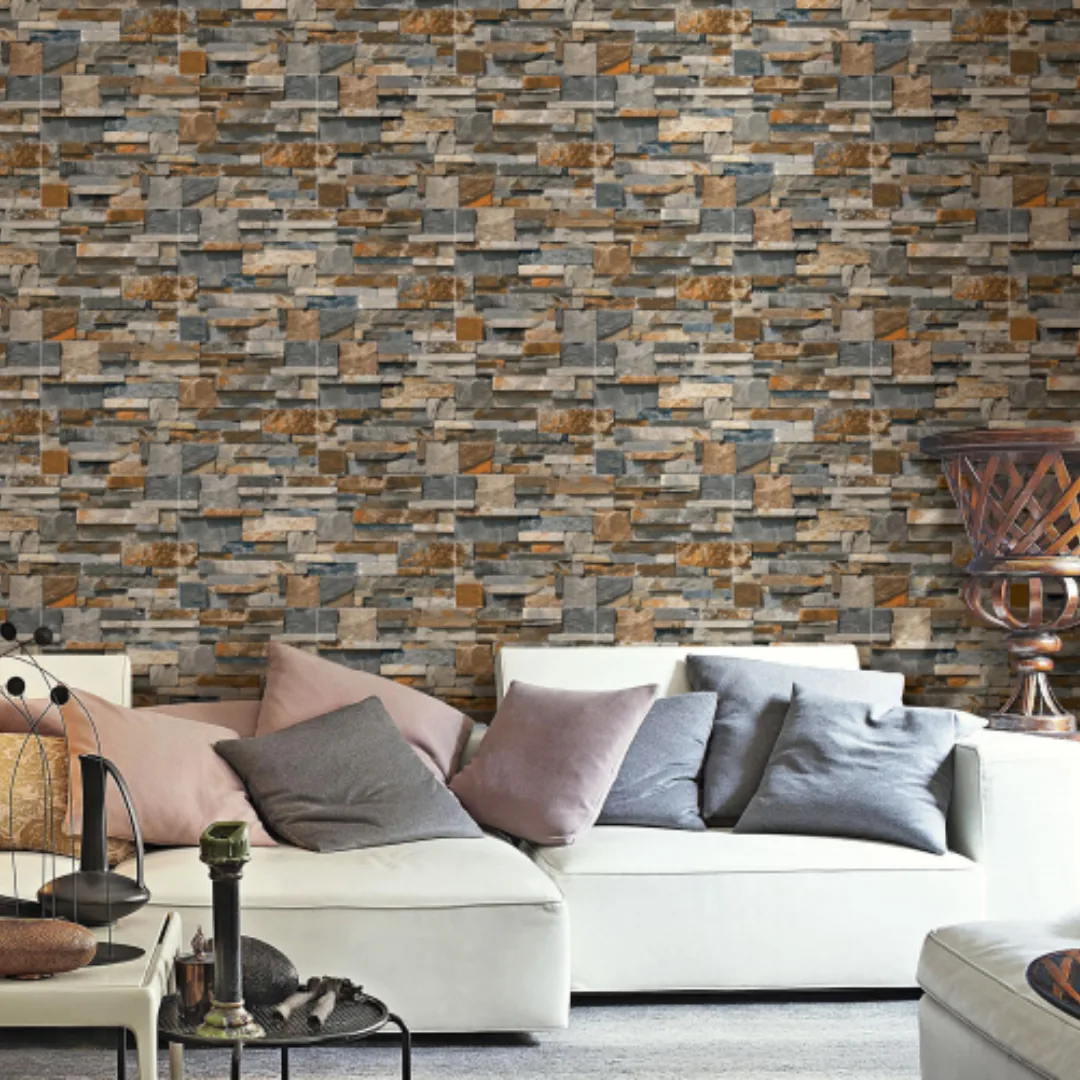
| Stone pattern | Natural stone texture, printed | Traditional and contemporary facades alike |
| Natural stone | Closer to real stone grain and colour variation | Homes wanting an authentic stone look without quarried stone |
| Brick pattern | Red or washed brick courses | Rustic-modern and boundary wall facades |
| Vitrified | Plain or lightly textured, single tone | Clean, modern, minimal facades |
| Wooden-look | Timber plank texture | Entrance accents and single-column features |
For the design side of this, including which combinations work and 15 worked layout ideas, our house front wall tiles design guide covers it in depth. This guide focuses on what each finish costs and lasts.
What actually drives elevation tile cost
The tile itself is rarely the biggest line
People budget for the tile and are surprised by everything else. On a typical elevation job, the tile material is often a smaller share of the total than the adhesive, labour and scaffolding combined, especially on a multi-storey facade where access itself costs money before a single tile is laid.
Adhesive is not optional to upgrade
Indoor tile adhesive is not rated for exterior use. Elevation work needs a C2-rated, polymer-modified outdoor adhesive, which costs more per bag than standard adhesive and is non-negotiable: using indoor adhesive outdoors is the single most common cause of tiles detaching within a year or two.
Scaffolding and access
Exterior tiling is really a fight against weathering, the combined effect of sun, rain and temperature swings that indoor tiles never face, which is why every spec on this list exists. Anything above ground floor needs scaffolding or a cradle, priced by the day and by height. A single-storey porch wall and a three-storey facade are not the same job even if the tiled area is similar, because access time dominates the schedule on taller work.
Expansion joints
Exterior tiling needs a joint, typically every 3 to 4 metres, to absorb the thermal expansion and contraction between hot days and cool nights. Skipping this to save a small amount of sealant is one of the most common causes of cracked grout and water seepage within the first two monsoons.
Wastage and cutting
Elevations have more corners, window returns and pillar wraps than a flat interior wall, so cutting waste runs higher than indoor tiling. Budget 12 to 15 percent extra tile rather than the 8 to 10 percent typical indoors.
Cost by finish, relative to each other
Rather than quote a single number that will be out of date by the time you read it, here is how the five finishes compare to each other, which is the more useful figure for budgeting:
- Vitrified tiles sit at the accessible end, since the finish is simpler to produce.
- Brick pattern and stone pattern sit in the middle, priced similarly to each other.
- Natural stone and wooden-look sit at the premium end, reflecting the more detailed print or texture work.
Within any one finish, price also varies by how large the facade area is and how much of it is cut around openings, which is why two quotes for seemingly similar homes can differ.
What determines how long an elevation tile job lasts
- Water absorption under 0.5 percent. This is the single number worth asking for. Ceramic tiles, which absorb more water, are not suitable for exteriors and will eventually crack or detach.
- UV-stable glaze. A cheap pigment fades within a few monsoon seasons. A quality elevation tile holds its colour for well over a decade.
- Correct adhesive and joints, covered above, matter as much as the tile itself for longevity.
Our house front wall tiles design guide covers the specific failure patterns, tiles falling off, colour fading, staining and grout cracking, and how each is prevented, in more detail than fits here.
How to get an accurate quote
- Bring your elevation drawing or at least accurate wall measurements, including height per storey.
- Decide the finish family first, since it changes both tile cost and whether natural stone's heavier weight needs structural confirmation.
- Ask specifically whether the quote includes C2 adhesive, expansion joints and scaffolding, since quotes that omit these look cheaper but are not comparable.
- Confirm the water absorption rating of the specific tile in writing.
- Plan the work for a dry season. Exterior adhesive needs stable weather to cure properly.
Bring your elevation drawing to our BTM Layout showroom and we will talk through which finish fits your facade and your budget before you commit to a quote.
Frequently asked questions
What is the cheapest elevation tile finish?
Vitrified tiles in a plain or lightly textured finish sit at the accessible end of our elevation range. Brick and stone pattern finishes cost more, and natural stone and wooden-look finishes sit at the premium end due to more detailed printing or texturing.
Is the tile the biggest cost in an elevation job?
Often not. Adhesive, labour, scaffolding and access frequently add up to more than the tile material itself, particularly on multi-storey facades where scaffolding time is a major part of the schedule. Budget for the whole job, not just the tile.
Why does elevation tiling need special adhesive?
Indoor tile adhesive is not rated for outdoor conditions. Elevation tiling needs a C2-rated, polymer-modified exterior adhesive, which costs more but is the main defence against tiles detaching from temperature swings and rain.
How much extra tile should I order for an elevation?
Budget 12 to 15 percent extra, higher than the 8 to 10 percent typical for an indoor wall, because elevations have more corners, window returns and pillar wraps that increase cutting waste.
How long should elevation tiles last?
A quality elevation tile with under 0.5 percent water absorption and a UV-stable glaze, installed with correct adhesive and expansion joints, should hold its look and stay attached for 15 years or more. Most early failures trace back to the adhesive or missing expansion joints, not the tile itself.
Can I mix two elevation tile finishes on one facade?
Yes, and it is a common and effective approach, such as a stone-look base with a plain vitrified upper storey, or a wooden-look accent on one column. Our house front wall tiles design guide covers specific combination ideas in more depth.