- 1. What makes elevation tiles different from indoor tiles?
- 2. What to look for in elevation tiles?
- 3. Stone-look front elevation tiles
- 4. Brick pattern elevation tiles
- 5. Wooden-look elevation tiles (ideas 6 to 7)
- 6. 3D front elevation tiles design
- 7. Front elevation tiles combination
- 8. Simple front wall tiles design for Indian houses
- 9. Front boundary wall tiles design (ideas 14 to 15)
- 10. Common elevation tile problems and how to prevent them
- 11. Best tile sizes for elevation
- 12. How to choose the right elevation tiles
- 13. See elevation tiles at our Bengaluru showroom
- 14. Frequently asked questions
31 August 2026
House Front Wall Tiles Design: 15 Elevation Ideas for Indian Homes (2026)

The front wall of your house is the first thing visitors, neighbours, and passers-by see. It sets the impression before anyone walks through the door. Getting your house front wall tiles design right transforms a plain concrete facade into something that looks finished, maintained, and designed. But elevation tiles do more than look good. They protect your exterior walls from rain, sun, pollution, and temperature swings that Indian weather delivers year after year, and our elevation tiles cost guide breaks down what that protection actually costs. This guide covers 15 elevation tiles design ideas by style, practical advice on tile combinations, what material survives outdoor conditions, common problems and how to prevent them, and picks for everything from single-floor homes to boundary walls.
What makes elevation tiles different from indoor tiles?
Elevation tiles face conditions that no indoor tile ever deals with: direct sunlight for hours, monsoon rain, temperature shifts from 15°C winter mornings to 42°C summer afternoons, air pollution, and dust accumulation. A tile that works perfectly inside your living room can crack, fade, or detach on an exterior wall within two years.
What to look for in elevation tiles?
Low water absorption
Vitrified or porcelain tiles with under 0.5% absorption are the only safe choice for exterior walls (vitrified vs ceramic tiles explained). Ceramic tiles absorb water, which expands and contracts with temperature changes and eventually cracks the tile or loosens it from the wall.
UV resistance
The glaze and pigment must resist fading under direct sunlight. Cheaper tiles lose colour within 3 to 4 monsoon seasons. Quality vitrified elevation tiles hold their colour for 15+ years.
Frost and heat resistance
Indian summers can push wall surface temperatures past 50°C. The tile must handle thermal expansion without cracking or popping off.
This is why elevation tiles cost more than indoor wall tiles. The material engineering required for outdoor survival is genuinely different, and cutting corners here shows within a few years.
Stone-look front elevation tiles
Stone front elevation tiles are the most popular exterior tile category in India because they mimic the prestige of natural stone cladding at a fraction of the cost and weight.
Idea 1: Natural sandstone-look for a warm, earthy facade
Sandstone-textured tiles in honey, beige, or buff tones suit both traditional Indian homes and modern villas. The rough texture adds visual depth and hides dust accumulation between rains.
Idea 2: Slate-look in charcoal or dark grey
A modern, bold choice for contemporary elevations. Slate-look tiles in dark tones make a striking contrast against light-coloured window frames and door surrounds.
Idea 3: Travertine-look for Mediterranean warmth
Cream and golden travertine-textured tiles bring a soft, sun-washed warmth to the facade. Particularly popular for independent villas and bungalows in Bengaluru's villa communities.
Browse natural stone elevation tiles, stone pattern tiles, and travertine elevation tiles at My Home Studio.
Brick pattern elevation tiles
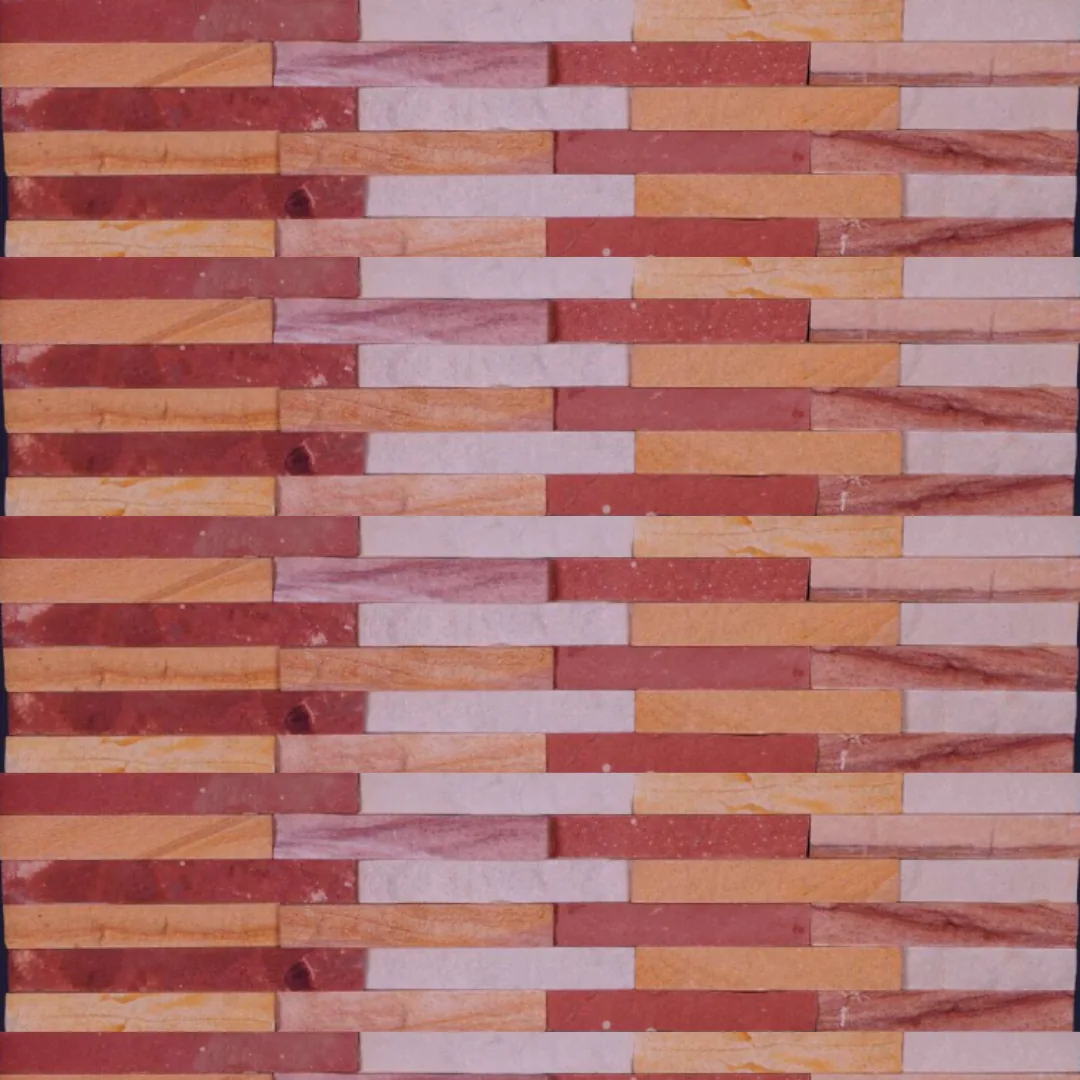
Brick-look tiles give your home the character of exposed brick without the structural and maintenance issues of real brickwork.
Idea 4: Red brick for a rustic-modern look
Classic red brick-pattern tiles on a portion of the front wall (around the entrance or a single column) paired with plain painted walls on the rest. The partial application keeps the look intentional rather than overwhelming.
Idea 5: White or grey washed brick for a contemporary feel
Whitewashed or grey brick-look tiles suit minimal, Scandinavian-influenced, or modern Indian elevations. They work well on boundary walls and entrance pillars where you want texture without strong colour.
Browse brick pattern elevation tiles.
Wooden-look elevation tiles (ideas 6 to 7)
Idea 6: Teak-tone planks on the entrance zone
Wooden-look tiles applied around the main door and entrance porch area add warmth and a residential, welcoming feel. The rest of the facade stays in stone-look or painted finish. This partial-wood approach is the most popular elevation tiles design for home projects our showroom sees.
Idea 7: Dark walnut accent strip
A vertical or horizontal band of dark wood-look tiles running across the facade as a design element. It breaks the monotony of a large plain wall and adds a premium detail at modest cost. Works especially well on multi-floor elevations to create visual separation between floors.
Browse wooden elevation tiles.
3D front elevation tiles design
3D front elevation tiles design is one of the fastest-growing elevation categories. These tiles have a raised, three-dimensional surface pattern that creates shadows and depth on the facade, especially when sunlight hits at an angle.
Idea 8: Geometric 3D tiles on a single column or entrance wall
A contained application of 3D textured tiles on one architectural element (a column, a parapet, or the wall flanking the main door) adds drama without making the entire facade look busy.
Idea 9: Wave-pattern 3D tiles on the upper floor
A horizontal band of wave-textured 3D tiles on the first floor or parapet wall catches light differently throughout the day, creating a living, shifting pattern that flat tiles cannot achieve.
Practical note on 3D elevation tiles: the raised surfaces collect more dust and pollution than flat tiles. In cities with heavy air pollution, plan for occasional pressure washing, or use 3D tiles on covered or semi-sheltered portions of the facade where rain does the cleaning naturally.
Front elevation tiles combination
A single tile type across the entire facade can look monotonous, especially on large houses. Front elevation tiles combination designs mix two complementary textures to create visual interest and architectural definition.
Idea 10: Stone-look base, plain painted upper
Stone-look tiles on the ground floor (up to the first-floor slab line), painted plaster above. This is the simple front wall tiles design in indian house approach that works on 80% of residential projects. The stone base grounds the building and protects the most weather-exposed section, while the painted upper keeps costs manageable.
Idea 11: Stone + wood combination
Stone-look tiles on the main facade with wooden-look tiles framing the entrance and balcony railings. The contrast between cool stone and warm wood creates depth and architectural character. For the balcony floor itself, see our balcony tiles design guide. This is the combination that gets the most compliments from visitors, based on what our customers report.
The combination rule: no more than two tile types on a single elevation. Three or more textures compete with each other and make the facade look disjointed. Choose one dominant texture (covers 60 to 70% of the tiled area) and one accent (30 to 40%).
Simple front wall tiles design for Indian houses
Not every home needs a dramatic facade. For most independent houses and row houses across India, a clean, well-executed simple front wall tiles design in indian house style is exactly right.
Idea 12: Plain vitrified tiles in a single tone
A uniform cream, beige, or light grey vitrified tile covering the front wall from plinth to parapet. No pattern, no mixed textures, just one clean surface. The simplicity reads as modern and maintained, and it costs significantly less than mixed-tile designs.
Idea 13: Two-tone split
A darker shade (medium grey, brown, or charcoal) on the plinth and ground-floor columns, a lighter shade (ivory, cream, or white) on the upper wall. Two tiles, same family, clean horizontal line between them. This is the most cost-effective way to add design to a facade without complexity.
Front boundary wall tiles design (ideas 14 to 15)
The boundary wall is the outermost face of your property and the first surface visitors see from the street. Front boundary wall tiles design is often overlooked, but a tiled boundary wall dramatically improves curb appeal. If the boundary wall frames your driveway, match it with our tiles design for parking ideas.
Idea 14: Stone-look tiles on the boundary wall pillars
Tile only the pillars and gate columns, keeping the wall between them in painted plaster or exposed brick. This selective application adds a premium finish at a fraction of the cost of tiling the entire boundary.
Idea 15: Brick-look tiles on the full boundary wall
For boundary walls that face a main road, a full brick-pattern or stone-pattern tile application protects the wall from rain and pollution damage while giving the property a finished, estate-like appearance.
Boundary wall tile tip: use a darker shade at the base (first 1 to 2 ft) where rain splash-back and mud staining are worst. A dark stone-look plinth band hides grime and protects the most vulnerable zone.
Common elevation tile problems and how to prevent them
This is the section nobody else writes, and it is the one Indian homeowners need most.
Problem 1: Tiles falling off the wall
The most common elevation failure. Causes: using indoor tile adhesive instead of outdoor-rated adhesive, poor wall preparation (dusty or uneven surface), skipping expansion joints, or using ceramic tiles that absorb water and expand.
Prevention: use only C2-rated outdoor tile adhesive (polymer-modified). Prepare the wall with a scratch coat. Leave 3mm expansion joints every 3 to 4 metres. Use only vitrified or porcelain tiles with under 0.5% water absorption.
Problem 2: Colour fading
Cheap tiles lose colour under UV exposure within 3 to 4 monsoon cycles. Premium vitrified tiles with UV-stable glazes hold colour for 15+ years.
Prevention: ask for UV resistance data. Stick with reputable brands (Exotica and Morson carry elevation-grade vitrified tiles with tested UV stability).
Problem 3: Staining and green algae
North-facing walls and shaded areas develop green algae and dark stains during monsoon. Textured tiles collect more grime than smooth ones.
Prevention: apply a hydrophobic sealer on the grout lines after installation. Pressure wash once a year before monsoon. For heavily shaded walls, choose a smoother tile finish that sheds water faster.
Problem 4: Grout cracking and water seepage
Standard indoor grout cracks in outdoor conditions. Water seeps behind the tiles and loosens them.
Prevention: use epoxy grout or polymer-modified outdoor grout for all elevation tile joints. Never use white cement as grout for exterior applications.
Best tile sizes for elevation
|
Size |
Best for |
Why |
|
300x600 |
Most residential elevations, boundary walls |
Manageable weight, easy to cut, wide design range |
|
200x600 |
Brick-look and wooden plank-look tiles |
Replicates the proportions of real brick or wood planks |
|
300x300 |
Mosaic or small stone-look on pillars and columns |
Good for curved or narrow surfaces |
|
600x600 |
Large, plain contemporary facades |
Fewer joints, cleaner look on big walls |
The practical default: 300x600 covers 80% of residential elevation projects in India. It balances design variety, installation ease, and structural safety (lighter individual tiles put less load on the adhesive bond).
How to choose the right elevation tiles
1. Material first
Vitrified or porcelain only. Never ceramic for exterior walls. Check the water absorption spec (must be under 0.5%).
2. Test for UV resistance
Ask the showroom if the tile is rated for exterior/outdoor use. Indoor-rated tiles will fade.
3. Choose your combination
One dominant texture (stone, brick, or plain) plus one accent (wood, 3D, or a contrasting tone). Two types maximum.
4. Plan the installation
Outdoor tile adhesive (C2 rated), outdoor grout (epoxy or polymer-modified), expansion joints every 3 to 4 metres, hydrophobic sealer on grout lines.
5. Bring your elevation drawing
Our showroom team will recommend tiles that work for your facade size, orientation, and budget, and calculate the exact quantity including wastage.
For indoor tile ideas, read our guides on bathroom tiles, hall floor tiles, and kitchen tiles.
See elevation tiles at our Bengaluru showroom
Elevation tiles need to be seen at actual size and in natural light. The texture, the colour shift between indoor lighting and sunlight, and the weight of the tile (which affects installation) all matter more for exterior applications than for any indoor tile.
Our BTM Layout showroom (right next to BTM metro station) displays elevation tiles in brick, stone, travertine, wooden, and vitrified finishes alongside sanitary ware, faucets, and complete home hardware. Bring your elevation drawing or a photo of your house front, and our team will match the right tiles to your facade.
Frequently asked questions
Which tile is best for house front wall in India?
Vitrified or porcelain tiles with under 0.5% water absorption and UV-resistant glaze. Stone-look and brick-pattern finishes are the most popular for Indian residential elevations. Never use ceramic tiles on exterior walls as they absorb water and can crack or detach in Indian weather conditions.
What is the difference between elevation tiles and normal wall tiles?
Elevation tiles are designed for outdoor use. They have lower water absorption, UV-stable glazes that resist fading in sunlight, and higher density to handle temperature extremes. Indoor wall tiles (ceramic) lack these properties and will fail on exterior applications within a few years.
How do I prevent elevation tiles from falling off?
Use C2-rated outdoor tile adhesive (polymer-modified), prepare the wall with a scratch coat, leave 3mm expansion joints every 3 to 4 metres, and use only vitrified or porcelain tiles. Skipping any of these steps is the most common cause of tile detachment.
Can I mix two types of elevation tiles on the same facade?
Yes, and it is recommended for visual interest. The rule is two types maximum: one dominant texture covering 60 to 70% of the facade, and one accent covering 30 to 40%. Stone + wood and stone + plain are the most popular combinations.
What tile size is best for house front elevation?
300x600 is the most popular and practical size for residential elevations. It balances design variety, manageable weight, and ease of installation. For wood-look and brick-look tiles, 200x600 replicates natural plank and brick proportions better.
How do I clean elevation tiles?
Pressure wash once a year, ideally before monsoon season. For green algae on shaded walls, use a mild acid-based tile cleaner (diluted according to the label) and a stiff nylon brush. Apply a hydrophobic sealer on grout lines after cleaning to slow future staining.