01 October 2026
Moroccan Tiles: Patterns, Colours and Where They Work Best

Moroccan tiles are the one pattern that splits a room into two camps the moment someone sees it: people who want a whole wall of it, and people who think it is too much for anywhere but a powder room. Both are right, depending on where it goes. The pattern itself has barely changed in centuries. What has changed is how Indian homes use it.
This guide covers where Moroccan tiles actually work, the colours that age well against Indian light, and how to use the pattern without it taking over a room you still have to live in.
What makes a tile "Moroccan"
The pattern traces back to zellige, the hand-cut mosaic tilework of Morocco, built from small glazed pieces set into a larger geometric shape. What you buy today is a single printed or moulded tile that repeats the same geometric or arabesque motif edge to edge, so the pattern looks continuous once a few tiles are laid together.
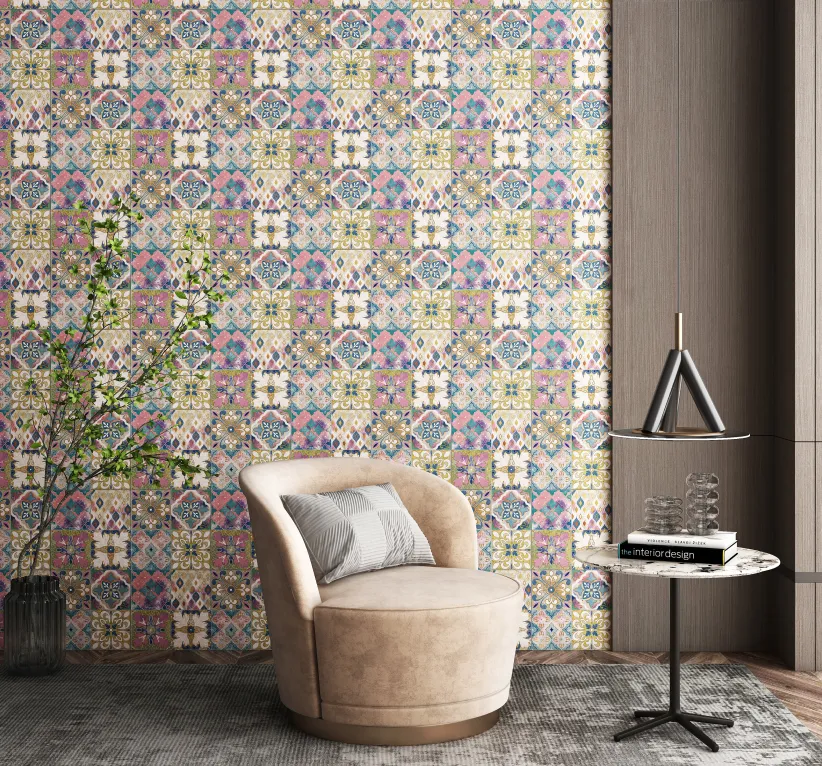
Two things decide how a Moroccan tile reads on a wall: the scale of the motif and the colour contrast within it. A small, tight motif in two close tones reads as texture from across the room. A large motif in two contrasting colours reads as pattern, and pattern is what most people actually mean when they ask for a Moroccan tile.
Where Moroccan tiles work
Bathroom walls
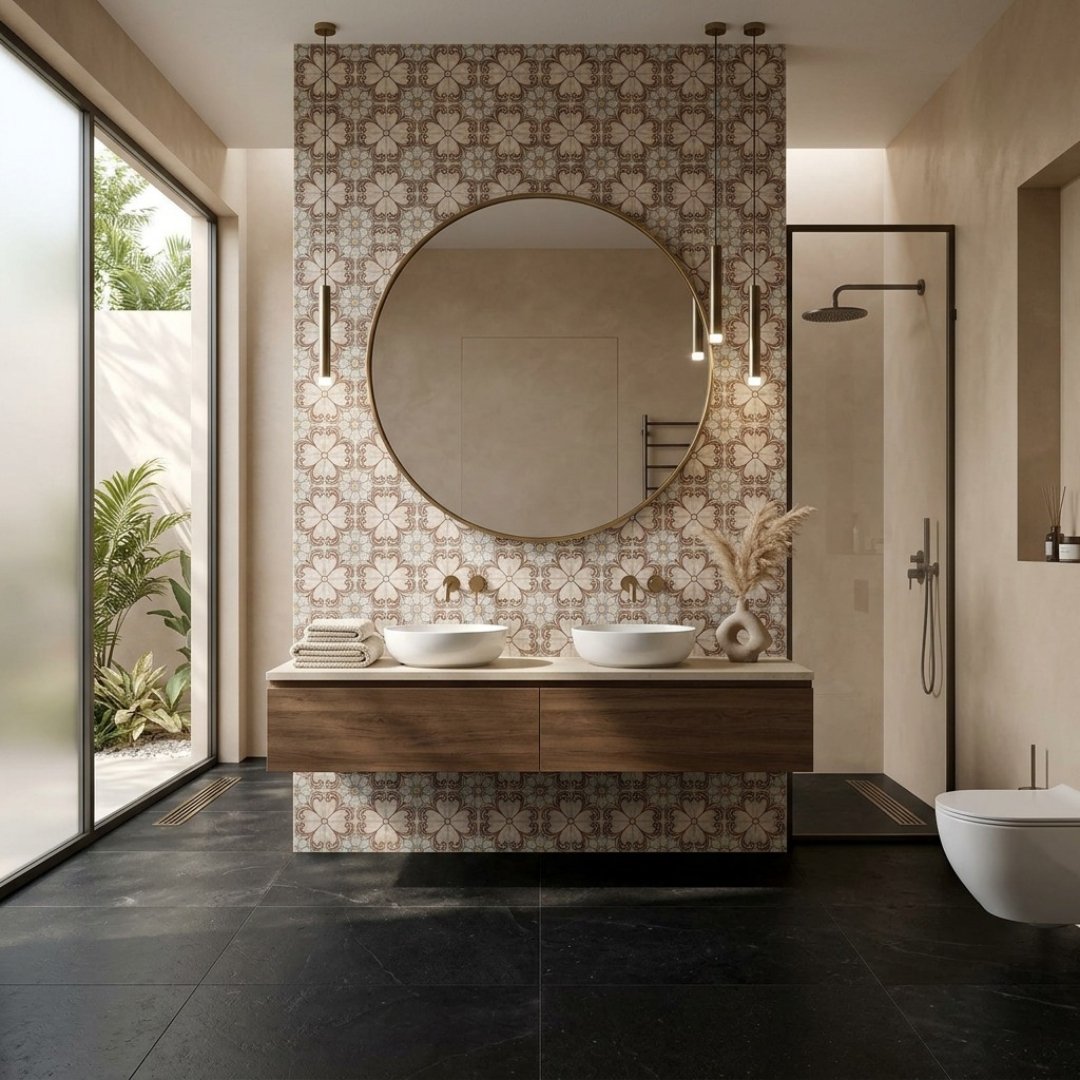
The single most common use in Indian homes. A full wall or a shower-area wall in Moroccan pattern gives a small bathroom a focal point without adding furniture or colour elsewhere. We carry Moroccan bathroom wall tiles as one of our most requested ranges.
Kitchen backsplash
Behind the hob or the sink, in place of plain subway tile. It carries the pattern at eye level, where it is seen daily, without covering the whole kitchen. See our Moroccan kitchen wall tiles.
Balcony and terrace floors
Moroccan floor tiles outdoors read as intentional rather than decorative, because the pattern photographs well against plants and outdoor furniture. This is also where the anti-skid finish matters most, since a balcony floor gets wet. Browse Moroccan balcony and terrace tiles.
Parking and driveway floors
Geometric Moroccan patterns in muted tones hide tyre marks and oil stains better than a plain floor, and the pattern reads well from the street. Our Moroccan parking tiles cover this use.
Living and dining floors, in small doses
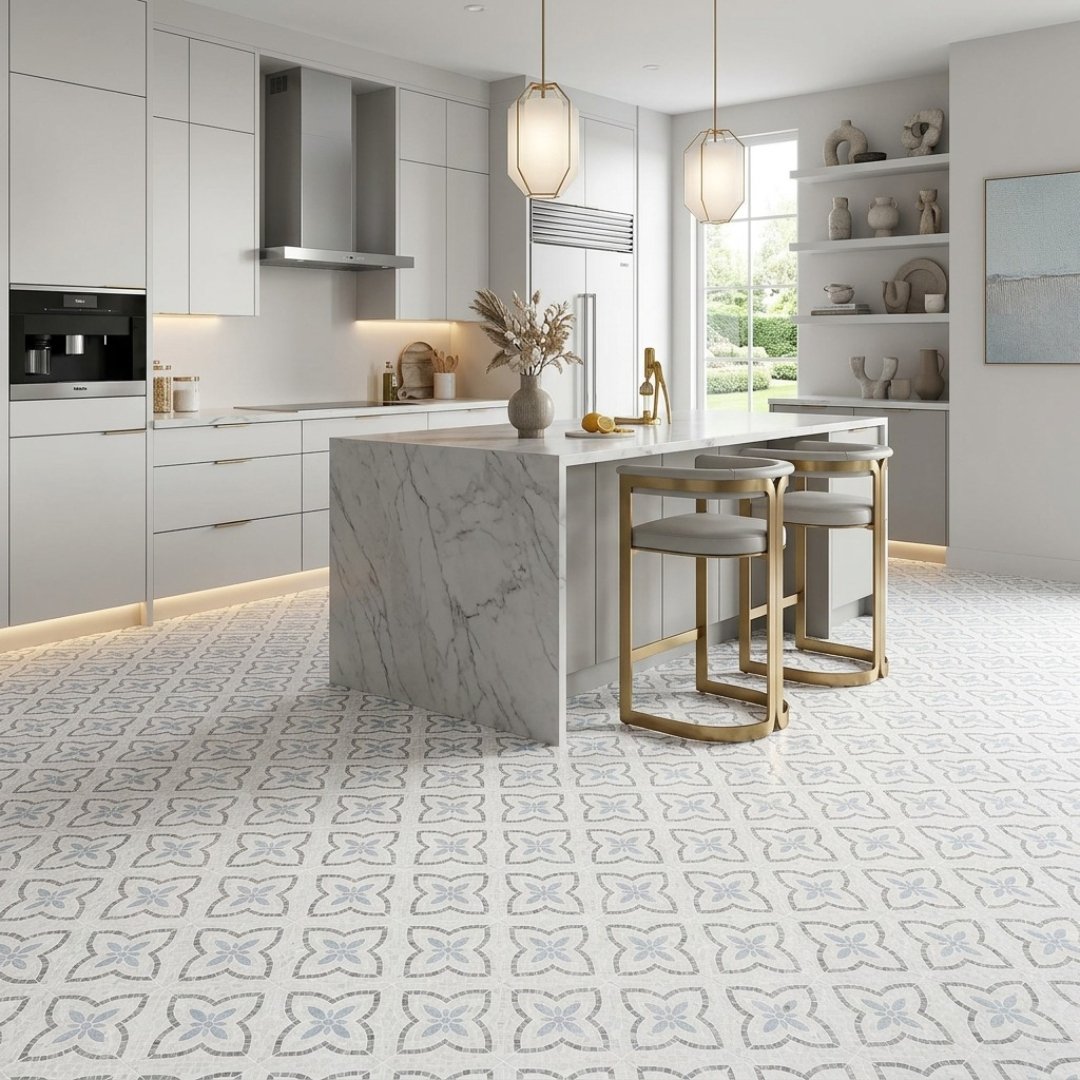
A Moroccan floor across a whole living room is a commitment most Indian homes do not make, and for good reason: it competes with furniture, rugs and artwork for attention. Where it does work is a single zone, such as a reading nook or the floor under a dining table, framed by plain tile around it.
Colours that work in Indian light
Indian interiors get strong, warm daylight for most of the day, which changes how a pattern reads compared to a showroom under white light.
- Black and white. The classic choice, and the safest. It reads as pattern rather than colour, so it does not fight your wall paint or furniture.
- Blue and white. Closer to the original zellige palette. Works well in bathrooms and kitchens with white fittings, less well against warm wood tones.
- Terracotta and cream. Suits a warmer, more traditional interior, and photographs well under the yellow-toned light common in Indian evenings.
- Grey and white. The most modern-reading option, and the one that pairs most easily with existing grey or beige floors elsewhere in the home.
- Green and white. Less common, strong when it works, and worth testing against your actual wall colour before committing, since green shifts more under warm light than the other combinations.
The combinations above all lean on basic colour theory, pairing a dominant and a secondary tone rather than two competing ones. Whatever colour you pick, buy the sample and hold it against the actual wall at the time of day the room gets the most light. A pattern that looks balanced under a showroom tube light can look heavier or lighter once it is on your own wall.
Pattern scale: the decision that matters more than colour
Moroccan tiles come in roughly three scales.
| Scale | Reads as | Best for |
| Small, tight repeat | Texture, not pattern | Large walls, where a bold pattern would overwhelm |
| Medium repeat | Clear geometric pattern | Feature walls, backsplashes, balcony floors |
| Large, bold repeat | Statement pattern | Small accent areas only, such as a niche or a single panel |
The common mistake is choosing a large bold pattern for a large wall. From a sample in hand it looks striking. Laid across four square metres it becomes the only thing in the room anyone notices, including the people who live there after the novelty wears off.
Pairing Moroccan tiles with the rest of the room
The pattern should be the one loud element. Everything around it stays quiet.
- Pair with plain tile on the remaining walls or floor, in a colour pulled from the pattern itself.
- Keep cabinetry and furniture in a single solid tone near the pattern.
- Avoid a second pattern in the same sightline, such as a patterned rug facing a patterned wall.
- Use plain grout close to the tile's base colour, not a contrasting grout, which turns the pattern into a grid.
Maintenance
Glazed Moroccan tiles clean the same way as any glazed ceramic or vitrified tile: a damp cloth and a mild cleaner, nothing abrasive on the glaze. The only extra care is in the grout lines, since a busy pattern makes a dirty grout line more visible than it would be on a plain tile. On a floor application, reseal or re-grout on the same schedule you would for any other floor.
Common mistakes
- Tiling an entire large room in pattern. Keep it to one wall, one floor zone or one backsplash.
- Choosing the pattern online without a sample. Moroccan patterns vary more between batches than plain tiles, so see the actual box before ordering the full quantity.
- Mismatched grout width. A pattern tile needs a consistent, usually narrow, grout joint, or the repeat looks broken.
- Using a non-anti-skid Moroccan tile outdoors. Confirm the slip rating before ordering for a balcony or parking floor.
How to choose
- Decide the one zone the pattern will own: a wall, a backsplash, a balcony floor or a small floor zone.
- Pick the scale that suits that zone's size, favouring smaller scale for larger areas.
- Choose colour against your actual wall and light, not a product photo.
- Confirm the anti-skid rating if the tile is going outdoors.
- Order the full quantity from one batch, since pattern tiles show shade drift between batches more than plain ones do.
Bring your room photo to our BTM Layout showroom and we will hold a few patterns up against it so you can see the scale in context before you decide.
Frequently asked questions
Where should Moroccan tiles be used in a home?
Bathroom walls, kitchen backsplashes, balcony floors and parking areas are the places Moroccan tiles work best in Indian homes. Using the pattern across an entire large room, such as a full living room floor, usually overwhelms the space. Keep it to one zone and let the rest of the room stay plain.
What colour Moroccan tile suits Indian homes?
Black and white is the safest choice and works in almost any interior. Blue and white suits bathrooms and kitchens with white fittings. Terracotta and cream pair well with warmer, traditional interiors. Test any colour against your actual wall under real daylight before ordering.
Are Moroccan tiles suitable for bathroom floors?
Yes, as long as the specific tile carries an anti-skid or textured finish rated for wet areas. Not every Moroccan pattern tile is rated this way, so confirm the slip resistance before ordering for a floor rather than a wall.
Do Moroccan tiles cost more than plain tiles?
Yes, typically, because the pattern needs more precise printing or moulding than a plain tile. The cost difference is usually moderate rather than dramatic, and since the pattern is normally used in one zone rather than a whole room, the total spend is often lower than tiling the same room entirely in a premium plain tile.
How do I stop a Moroccan pattern looking too busy?
Limit it to one wall, one floor zone or one backsplash, and keep everything else in the room plain and in a single tone. Avoid a second pattern in the same sightline, and use grout close to the tile's own colour rather than a contrasting grout.
Can I mix two Moroccan patterns in the same room?
It is possible but difficult to get right, and most homes are better served by one pattern used well. If you want variation, change the scale of the same pattern family between two zones rather than introducing a second, unrelated motif.