- 1. Tread, riser and nosing: the three parts that need separate decisions
- 2. Anti-skid rating for stairs, and why it is stricter than a bathroom floor
- 3. Tile sizes for treads and risers
- 4. Staircase tile design ideas
- 5. Common mistakes on staircase tiling
- 6. How to choose tiles for your staircase
- 7. Frequently asked questions
03 October 2026
Staircase Tiles Design: Treads, Risers and Anti-Skid Options

A staircase gets tiled almost as an afterthought in most Indian homes, once the rest of the house is finished and the budget is nearly spent. That is backwards. A staircase takes more repeated foot traffic per square foot than almost any other surface in the house, and it is the one place where the wrong tile does not just look wrong, it becomes a fall risk.
This guide covers how to tile a staircase properly: tread and riser sizing, the anti-skid rating that actually matters here, and the design choices that hold up under daily use.
Tread, riser and nosing: the three parts that need separate decisions
A staircase is built from treads, the flat part you step on, and risers, the vertical part between them. The front edge of the tread, where it overhangs the riser slightly, is called the nosing.
- Tread: takes the full weight and friction of every step. This is where slip resistance matters most.
- Riser: takes no foot traffic, so it can be a plain or even a different finish from the tread without any practical downside.
- Nosing: the edge people misjudge most often when going down. A contrasting strip or a rounded nosing tile reduces the chance of catching a foot on the edge.
Anti-skid rating for stairs, and why it is stricter than a bathroom floor
A bathroom floor is wet for a few minutes at a time. A staircase tread gets stepped on while wet from a dripping umbrella, bare wet feet after a shower, or spilt water, and a fall on stairs travels further and lands harder than a fall on a flat floor.
Slip resistance ratings for Indian-made tiles are set against specifications from the Bureau of Indian Standards. For indoor stairs, look for the same R10 to R11 anti-skid rating used for bathroom floors. For an outdoor or semi-outdoor staircase, exposed to rain, go to R11 or R12. Our anti-skid tiles guide covers how these ratings are tested and what to check in the showroom.
Tile sizes for treads and risers
Standard Indian residential treads run 25 to 30cm deep and risers 15 to 18cm tall. Two sizing approaches work:
- Full-tread tile. One tile cut to the exact tread depth, with a factory or site-polished front edge. Clean look, needs accurate cutting.
- Standard floor tile, cut to fit. Using the same 300x300 or 300x600 tile as the rest of the house, cut down for the tread. Cheaper and keeps the staircase visually connected to the adjoining floor, at the cost of a visible cut edge unless it is polished.
Riser tiles are usually a plain cut from the same batch, sized to the riser height. Our tile sizes guide covers the conversions between feet, mm and the standard trade sizes if you need to work out exact cuts.
Staircase tile design ideas
Match the adjoining floor
The safest and most common choice. Using the same tile on the staircase as the hall or living room floor it connects to makes the whole ground floor read as one continuous surface, which is also the easiest to plan and order in one batch.
Contrast riser, matching tread
Tread in a neutral stone-look or plain finish, riser in a contrasting colour, often picked up from the wall paint or the balustrade. Since the riser takes no foot traffic, this is a safe place to introduce colour without any practical risk.
Wooden-look treads
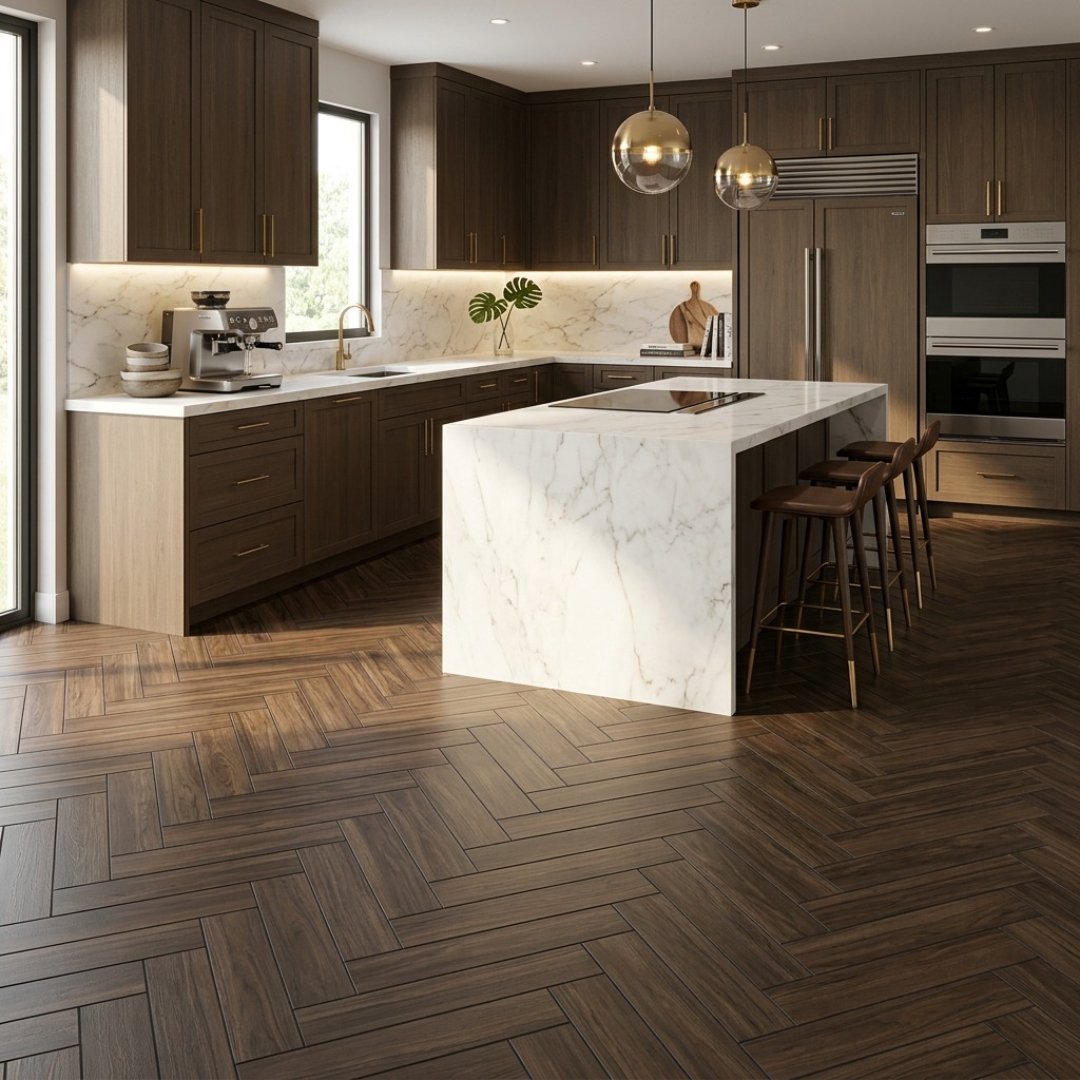
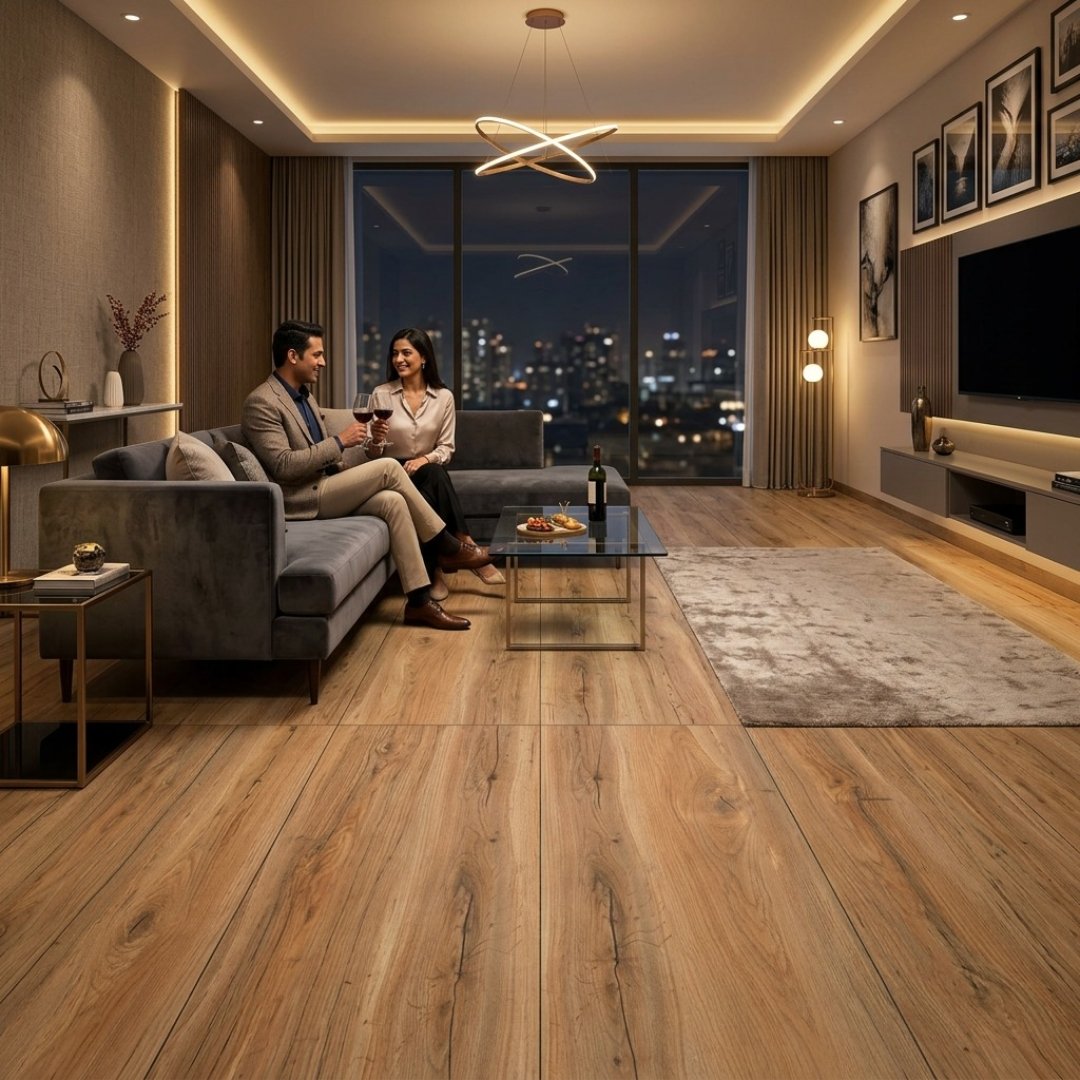
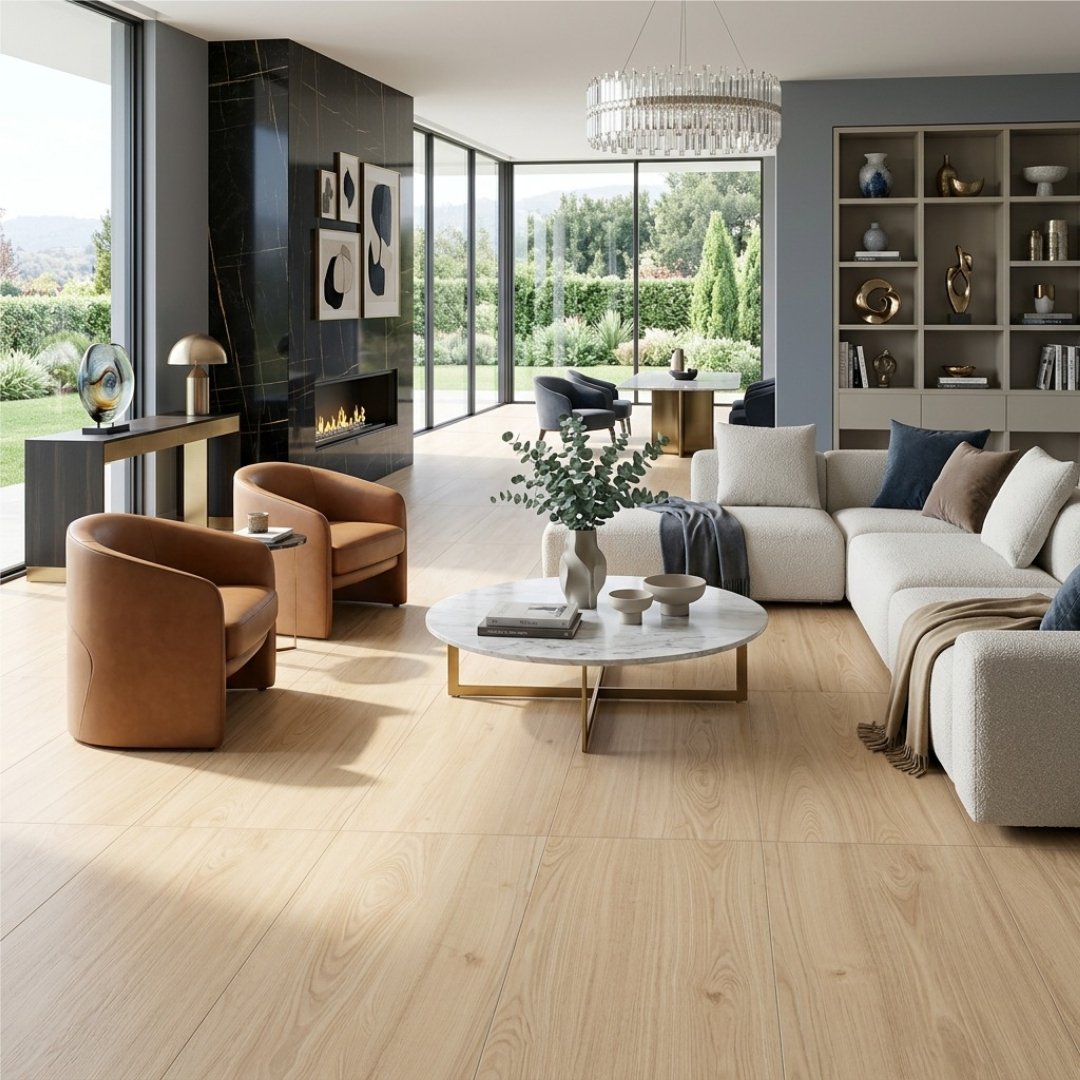
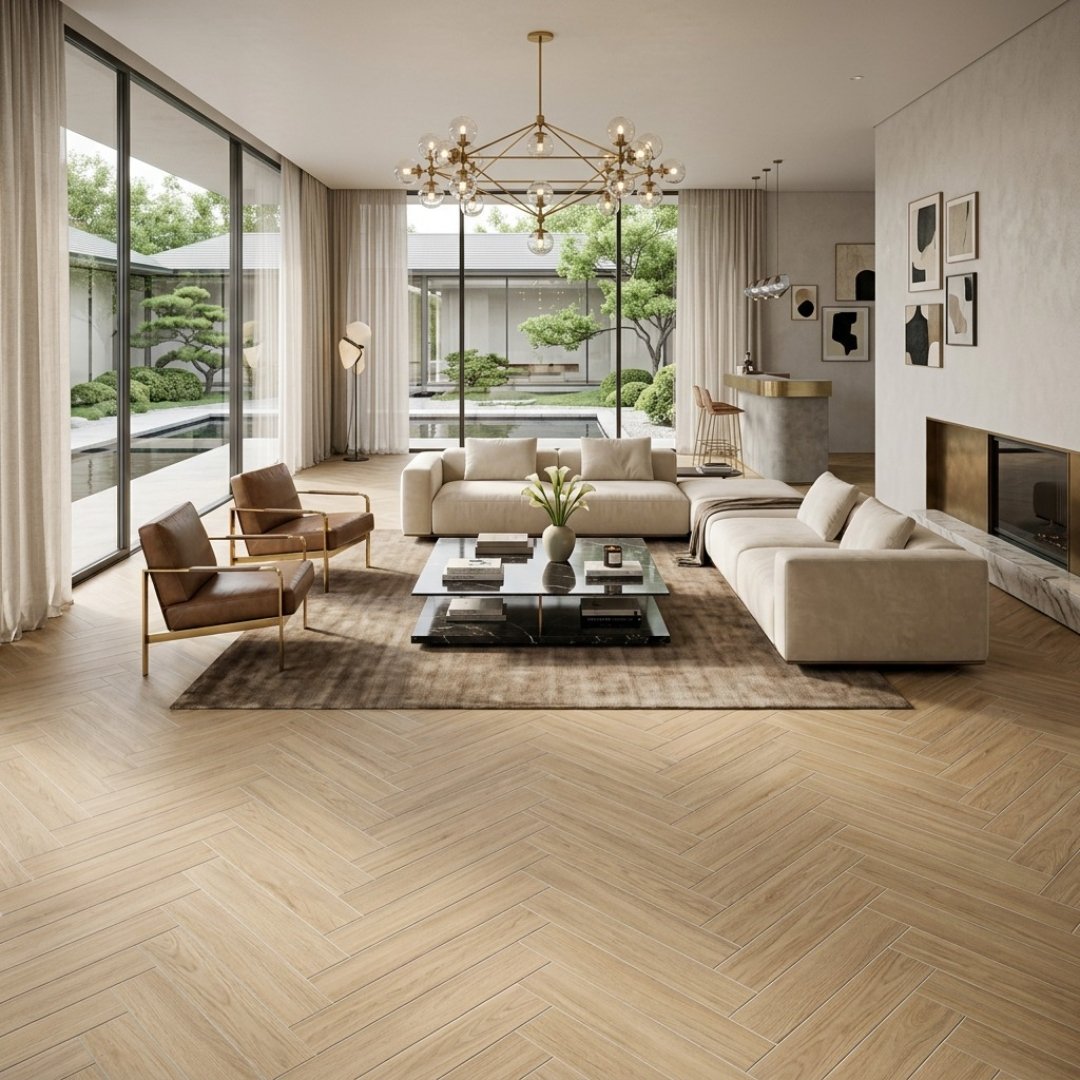
A wooden-look vitrified tile on the treads gives a staircase warmth that plain stone-look does not, and avoids the maintenance of real wood on a surface that gets scuffed daily. See our wooden-look floor tiles.
Stone or marble-look for a grand entrance stair
In larger homes, a marble-look tread paired with a stone-pattern riser reads as a proper architectural stair rather than a connecting passage. This is where marble and stone-look floor tiles are usually used.
Nosing strip in a contrasting tone
A thin strip of a darker or metallic-edged tile along the nosing improves visibility of each step edge, which matters most on a staircase with low natural light. This is a safety feature as much as a design one.
Common mistakes on staircase tiling
- Choosing a high-gloss tread for the look. Gloss on a tread is one of the most common causes of a household staircase fall. Keep gloss, if you want it, to the riser.
- No contrast at the nosing. On a staircase with low lighting, a flush, same-colour nosing is hard to judge by eye, especially for older family members.
- Ignoring outdoor exposure. An external staircase needs a higher anti-skid rating than an indoor one, and a water-resistant adhesive.
- Cutting treads from leftover stock. A staircase is visible from multiple angles at once, so shade mismatches between leftover tiles from different batches are more noticeable here than on a flat floor.
- Skipping the sample test. Walk on the actual sample tile in socks and in wet feet before ordering, since a tread you cannot test safely in the showroom is one you are guessing on.
How to choose tiles for your staircase
- Decide tread and riser separately. The tread needs anti-skid rating. The riser does not.
- Match the tread to the adjoining floor if you want visual continuity, or contrast deliberately if the staircase is a feature in its own right.
- Confirm the anti-skid rating in writing for indoor versus outdoor use.
- Decide on a nosing treatment before ordering, since it is easier to plan with the main order than add afterward.
- Order 10 to 15 percent extra, since staircase cutting produces more waste than a flat floor of the same area.
Bring your staircase measurements, tread depth, riser height and total number of steps, to our BTM Layout showroom and we will help you work out the exact cuts and quantity.
Frequently asked questions
What is the best tile for staircases in India?
A matte or textured vitrified tile with an R10 to R11 anti-skid rating for indoor stairs, R11 to R12 for outdoor or exposed stairs. Marble-look and wooden-look finishes both work well for the tread as long as the anti-skid rating is confirmed, since the look does not guarantee the grip.
Should staircase tiles match the floor of the house?
It is the most common and safest choice, since it makes the ground floor read as one continuous surface and is simple to order in one batch. A contrasting riser is a safe way to add colour without changing the tread's slip resistance.
Is glossy tile safe for stairs?
Not for the tread. A glossy tread is one of the more common causes of a household staircase fall, particularly with wet or socked feet. If you want a glossy finish, keep it to the riser, which carries no foot traffic.
What is the standard size for staircase tiles?
Indian residential treads commonly run 25 to 30cm deep and risers 15 to 18cm tall. Tiles are either cut to the exact tread size from a larger format or sized from the standard 300x300 or 300x600 floor tile used elsewhere in the home.
Do I need a different tile for an outdoor staircase?
Yes, usually a higher anti-skid rating, R11 to R12 rather than R10, because an outdoor stair gets wet from rain rather than just daily use. A water-resistant adhesive and a vitrified or porcelain body with low water absorption also matter more outdoors.
How much extra tile should I order for a staircase?
Add 10 to 15 percent to the measured area, higher than the 8 to 10 percent usual for a flat floor, because cutting treads and risers to size produces more waste than cutting a plain floor.