- Home

- Blog
- Kitchen Floor Tile Ideas for Indian Kitchens
16 September 2026
Kitchen Floor Tile Ideas for Indian Kitchens

A kitchen floor in an Indian home takes turmeric, oil, boiling water, dropped steel vessels and a mop twice a day. That is a harder job than any other floor in the house, and it is why the tile that looks best in the showroom is often the wrong one to lay in a kitchen.
This guide covers kitchen floor tile ideas that survive Indian cooking, which finishes hide daily mess, how the floor should relate to your cabinets, and what to avoid entirely.
Start With Finish, Not Colour
Matte wins in a kitchen. It is not a style preference, it is a safety one. Oil on a glossy floor is genuinely dangerous, and a high-gloss kitchen floor shows every footmark between mops. A matte or satin vitrified tile gives grip when the floor is wet and hides the daily film that builds up around the cooking zone.
Keep the gloss for the wall, where light bounce helps and nobody stands on it. The full argument for textured floors is in our anti-skid tiles guide, and the same reasoning applies at the stove.
Eight Kitchen Floor Tile Ideas That Work
1. Matte marble-look in a mid tone
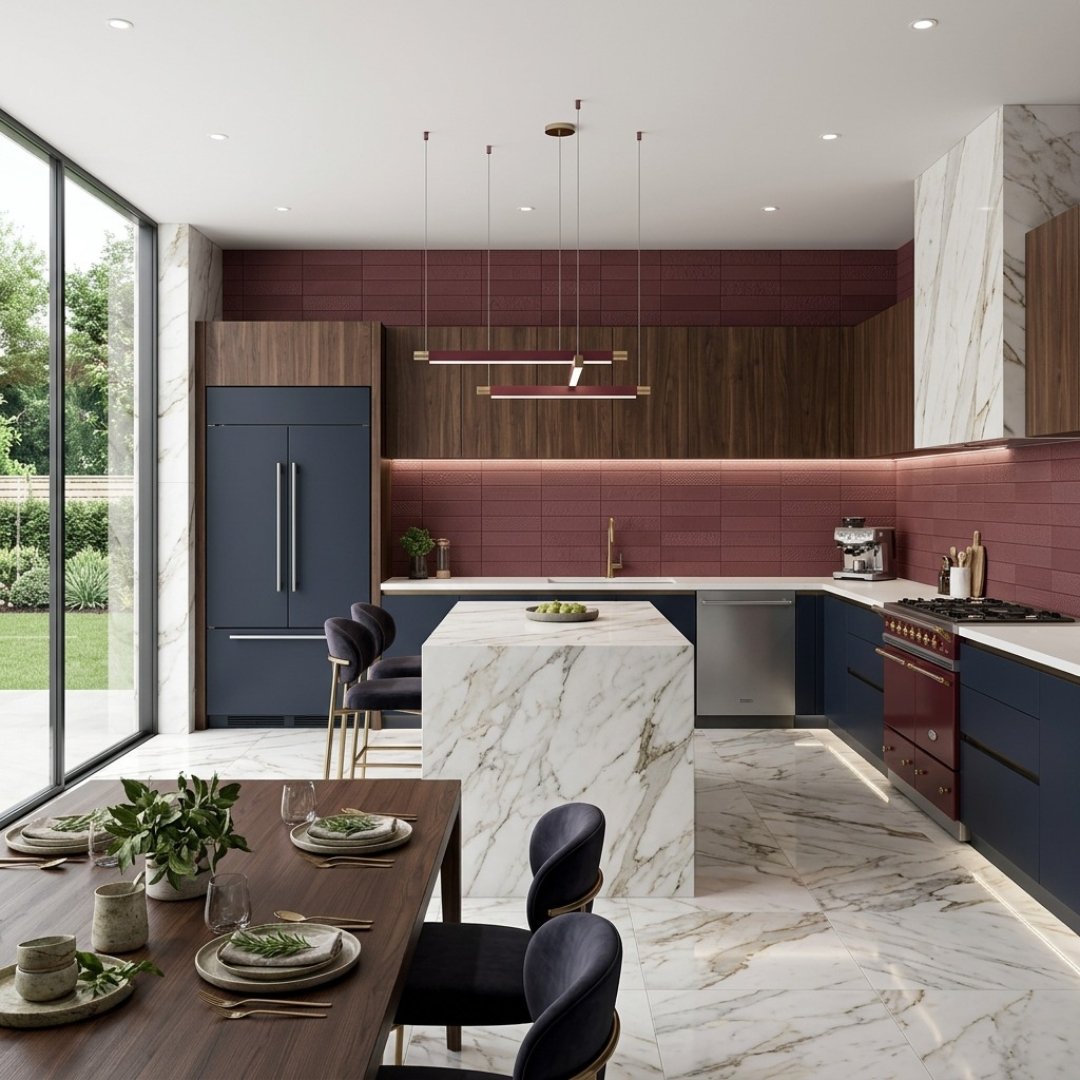
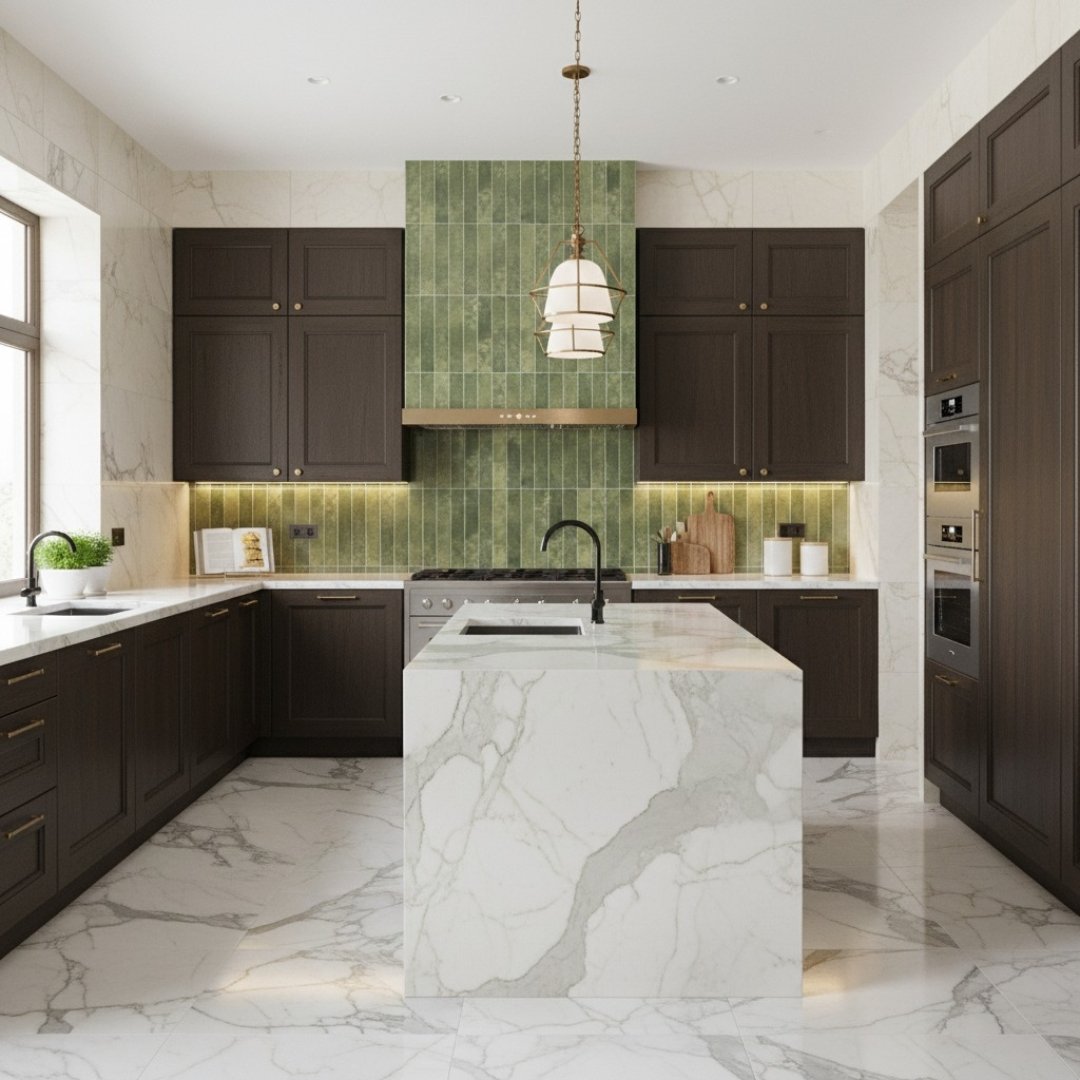
The most requested kitchen floor in Bangalore. A beige or light grey marble-look vitrified tile in 600x600 matte is forgiving with dust, works with almost any shutter colour, and continues into the dining area without a break. See our marble and stone kitchen floor tiles, which is the biggest kitchen floor range we hold.
2. Wooden-look planks
Warmth without the maintenance of real timber, and the obvious answer in an open kitchen that shares a floor with the living room. Choose a matte plank rather than a glossy one, and keep the plank direction running along the length of the kitchen. See wooden-look kitchen floor tiles.
3. Plain and textured in a single tone
The quiet option. One flat tone across the floor puts all the attention on the cabinets and the backsplash. It also photographs poorly and lives beautifully, which is the opposite of most design choices. See plain and textured kitchen floor tiles.
4. Geometric patterns in the working zone
A patterned floor hides crumbs and splashes better than a plain one. Keep the pattern small in scale and mid toned, and avoid strong contrast, because a busy black and white floor fights a busy backsplash. See geometric kitchen floor tiles.
5. Moroccan tiles as a defined zone
Instead of tiling the whole kitchen in pattern, lay a Moroccan patch under the dining side or in a galley strip and keep the rest plain. It reads as intentional rather than busy. See Moroccan kitchen floor tiles.
6. Stone-look in a darker tone
Charcoal and dark stone finishes hide masala stains and tea splashes that light floors show. They also show dust faster in the dry months, so this is a trade between two kinds of visible mess. Pick based on whether your kitchen gets more dust or more spills.
7. One floor through kitchen and dining
In an open plan flat, running the same tile through both makes the space feel larger and avoids the awkward junction where two floors meet. Change the finish if you want separation, not the tile.
8. Large format with fewer joints
600x1200 in a larger kitchen means fewer grout lines to scrub, which is the single biggest maintenance gain available. It needs a level floor below, so check that before ordering. Sizes and their trade-offs are covered in our tile sizes guide.
Matching the Floor to Your Cabinets
| Cabinet colour | Floor that works | Why |
| White or ivory | Grey, beige or wooden-look | Gives the room a base so it does not float |
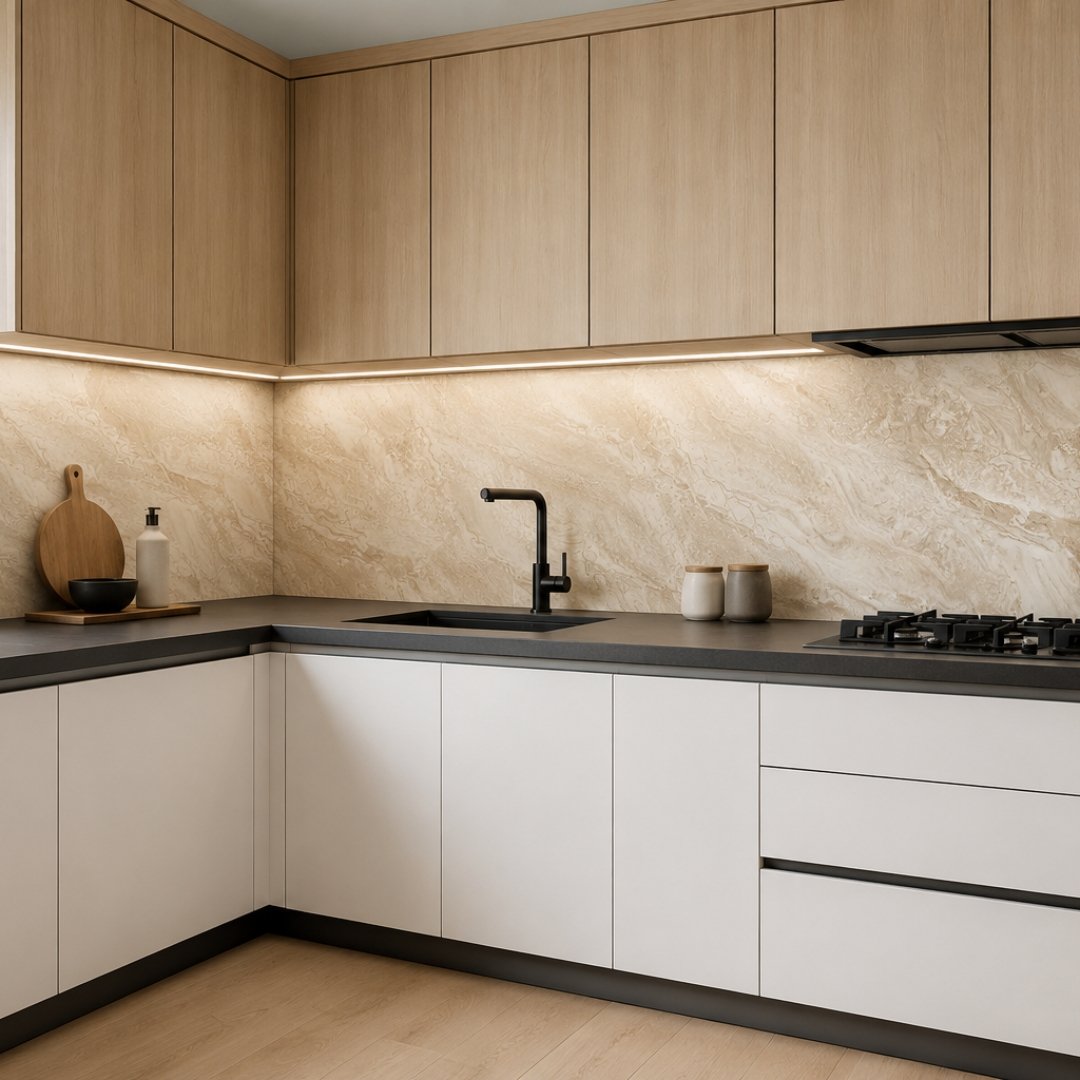
| Wood laminate | Neutral stone-look, avoid a second wood tone | Two different wood tones rarely agree |
| Dark grey or charcoal | Light marble-look | Keeps a small kitchen from closing in |
| Bold colour | Plain mid tone, no pattern | One loud element per kitchen is enough |
The countertop matters as much as the shutters. Black granite is still the most common counter in Indian kitchens, and it pairs more easily with a light floor than a dark one. Our modern kitchen tiles design guide covers the wall and backsplash side of the same decision.
Grout: The Part That Ages Badly
Kitchen grout takes oil. Cement grout absorbs it and darkens along the cooking line within a year, which is why kitchens look tired before the tiles are worn. Two things fix this. Choose a grout shade close to the tile rather than a strong contrast, and consider epoxy grout at least in the cooking zone, since grout chemistry is what decides whether the joint absorbs oil or repels it.
Fewer joints also means less to clean, which is the practical argument for a larger tile in a kitchen.
What to Avoid in an Indian Kitchen
- High-gloss floors. Slippery with oil, and every footmark shows.
- Very light plain floors in a kitchen that cooks with turmeric daily. The stain shows even after it is cleaned.
- Heavily textured anti-skid tiles with deep grooves. They grip well and they hold oil in the texture, so scrubbing becomes a weekly job.
- Natural stone that needs sealing. Marble and untreated stone stain from lemon, oil and turmeric.
- Different floors either side of the kitchen door in an open plan flat, which draws a line exactly where you want continuity.
Practical Points Before You Order
- Check the floor level against the rest of the house, since a kitchen often has a different screed thickness.
- Plan the layout so full tiles land at the entrance and cut pieces sit under the cabinets.
- Remember that base cabinets cover roughly a foot of floor along each run, so tile under them anyway but do not spend on pattern there.
- Order 10 percent extra and keep half a box, because a kitchen floor is the most likely in the house to take a dropped weight.
- Ask for the tile's water absorption if the kitchen opens to a utility balcony, since that junction gets wet.
Indian tile bodies are graded on water absorption and dimensional tolerance under Bureau of Indian Standards specifications, which is the difference worth checking when two tiles look identical and are priced differently.
How to Choose
Decide in this order: matte finish first, then a tone that suits your shutters and counter, then size based on the kitchen area, then pattern only if the rest of the kitchen is plain. If the kitchen is open to the living room, settle the living room floor first and let the kitchen follow it, since the larger space sets the tone. Our hall floor tile designs guide covers that side.
Bring your shutter sample and counter sample to the showroom and put them on the floor tile, not against a wall. That is how the combination will actually be seen.
Frequently Asked Questions
Which floor tile is best for an Indian kitchen?
A matte or satin vitrified tile in 600x600 or 600x1200, in a mid tone. Matte gives grip when oil or water reaches the floor and hides the daily film that builds up near the stove. Gloss finishes are slippery and show every footmark, so they belong on the wall rather than the floor.
Should kitchen floor tiles be the same as the living room?
In an open plan flat, yes. One floor running through both makes the space feel larger and avoids an awkward junction. In a closed kitchen you can change the tile, though keeping the same tone family still helps the home feel consistent.
Are wooden-look tiles a good idea in a kitchen?
Yes, if you choose a matte plank. They give the warmth of timber without the water and oil problems of real wood, and they work particularly well where the kitchen shares a floor with the living area. Avoid glossy plank finishes near the cooking zone.
What colour kitchen floor hides dirt best?
Mid tones with some pattern or movement. Very light plain floors show turmeric and oil, while very dark floors show dust and dried water marks. A mid grey, beige or patterned stone-look tile hides both kinds of mess better than either extreme.
What grout should I use in a kitchen?
Use a shade close to the tile rather than a contrast, and use epoxy grout at least around the cooking zone. Cement grout absorbs oil and darkens along the working line within a year, which makes a good floor look old before the tiles are worn.
Is anti-skid tile necessary in a kitchen?
A matte surface is usually enough. Heavily textured anti-skid tiles grip well but hold oil in the texture, so they need scrubbing rather than mopping. In a kitchen, matte or lightly textured is the better balance between grip and cleaning.
What tile size works best in a kitchen?
600x600 suits most Indian kitchens. In a larger kitchen, 600x1200 reduces the number of grout lines, which is less to clean. Whatever the size, plan the layout so full tiles land at the doorway and cut pieces sit under the base cabinets.