- Home

- Blog
- Types of Faucets Explained: Which One Fits Your Bathroom
- 1. The Basic Difference: Single Lever or Two Handle
- 2. Wash Basin Taps
- 3. Shower Area Fittings
- 4. Utility Fittings People Forget to Order
- 5. Kitchen Faucets
- 6. Materials and Finishes
- 7. Hard Water: The Bangalore Test
- 8. How Many Faucets Does One Bathroom Need?
- 9. How to Choose
- 10. Frequently Asked Questions
12 September 2026
Types of Faucets Explained: Which One Fits Your Bathroom

A bathroom needs more taps than most people expect. A basin tap, a wall mixer for the shower, a health faucet, an angle cock behind the WC, a bib cock for the bucket. Each has a name, each comes in several forms, and the plumber usually asks for all of them on a day when you are thinking about tiles.
This guide explains the types of faucets used in Indian homes, what each one is for, and how to choose between them without relying on the showroom to decide for you.
The Basic Difference: Single Lever or Two Handle
Every tap falls into one of two families.
- Single lever. One handle controls flow and temperature together, using a ceramic cartridge inside. Quicker to use, fewer moving parts on the outside, and the standard choice in new Indian bathrooms.
- Two handle, or quarter turn. Separate hot and cold controls, or a single cold supply with a quarter turn spindle. Simpler to service, cheaper, and still the sensible choice where there is no hot water line.
The mechanism inside is where quality sits. A tap with a ceramic disc cartridge does not drip the way an old rubber washer tap did, and a cartridge can be replaced without changing the body, provided the brand still supplies the part. That is worth asking about before you buy.
Wash Basin Taps
Pillar cock
A single tap mounted on the basin, one water supply, no mixing. The most common fitting in Indian homes and the least expensive. Good for a guest bathroom or anywhere with no geyser line. See our pillar cocks.
Single lever basin mixer
One handle, two supplies, mixed at the cartridge. The default for a main bathroom where hot water is connected. Our single lever basin mixers are the largest faucet range we hold, which reflects what most homes now fit.
Tall body mixers and pillar cocks
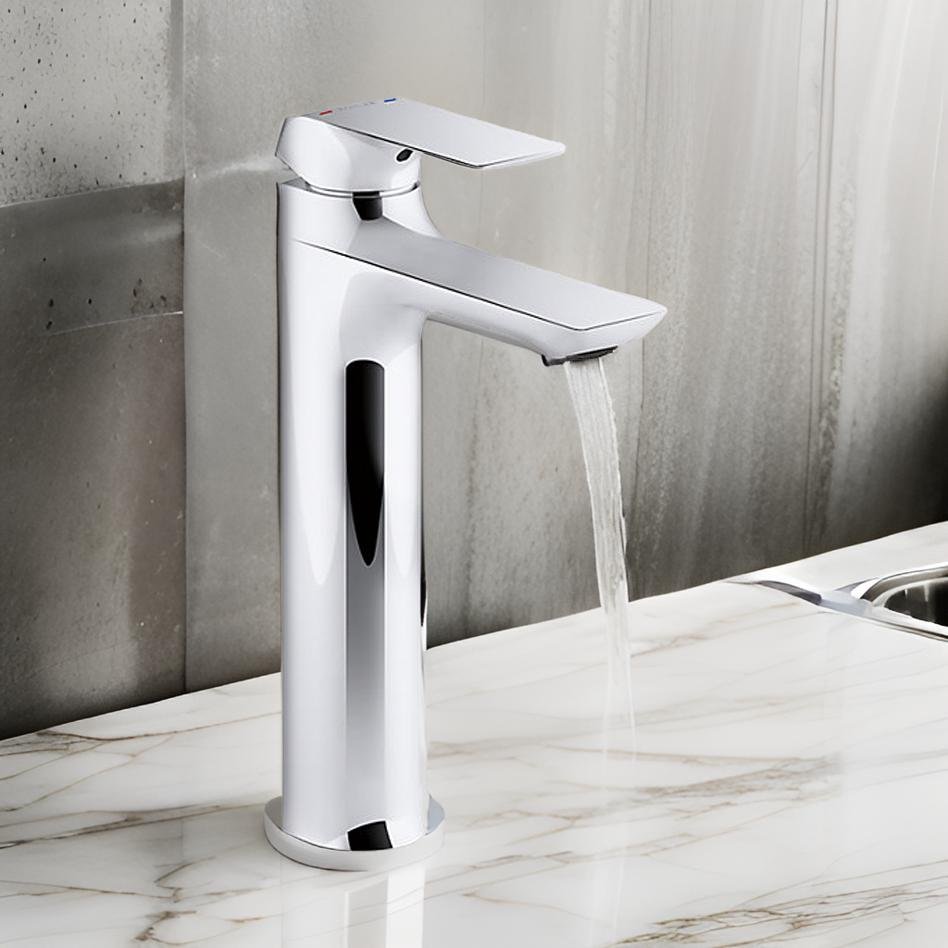
A taller spout for use with a table top basin, where the bowl sits above the counter. Fitting a standard height tap to a table top basin is one of the most common ordering mistakes, because the spout ends up below the rim of the bowl. Our tall body single lever mixers exist for exactly this.
Wall mounted and centre hole
A wall mounted tap keeps the counter clear and makes cleaning easier, but the plumbing point has to be set during the civil work, so the decision is made early. A centre hole basin mixer fits a basin with a single pre-drilled hole in the centre.
Swan neck
A long curved spout, usually used over a counter or in utility areas where you need reach and height. See swan neck taps.
Shower Area Fittings
Wall mixer
Mixes hot and cold and feeds the shower. Some versions include a provision for a hand shower. Our wall mixers cover both.
Diverter
A diverter sends water either to the overhead shower or to the hand shower or spout. Concealed diverters look cleaner, and they are also the fitting you least want to fail, because servicing one means opening the wall. Buy a serviceable brand here even if you economise elsewhere.
Overhead and hand showers
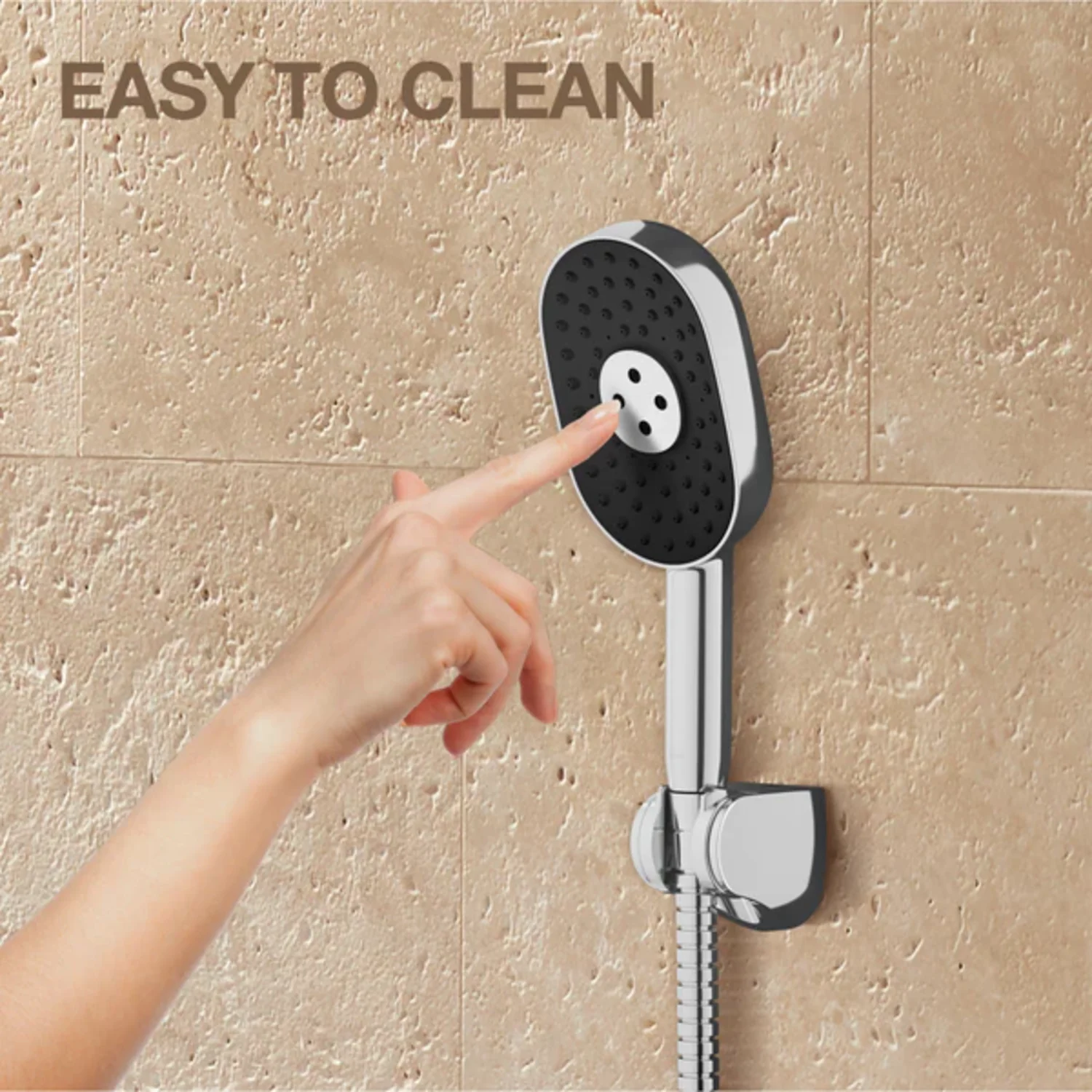
Overhead showers vary by face size and spray pattern. A large face looks impressive and needs decent water pressure to perform, which matters in a ground floor flat or at the end of a supply line. A hand shower is the practical fitting for cleaning the bathroom, bathing children and washing a pet, and most households use it more than the overhead.
Utility Fittings People Forget to Order
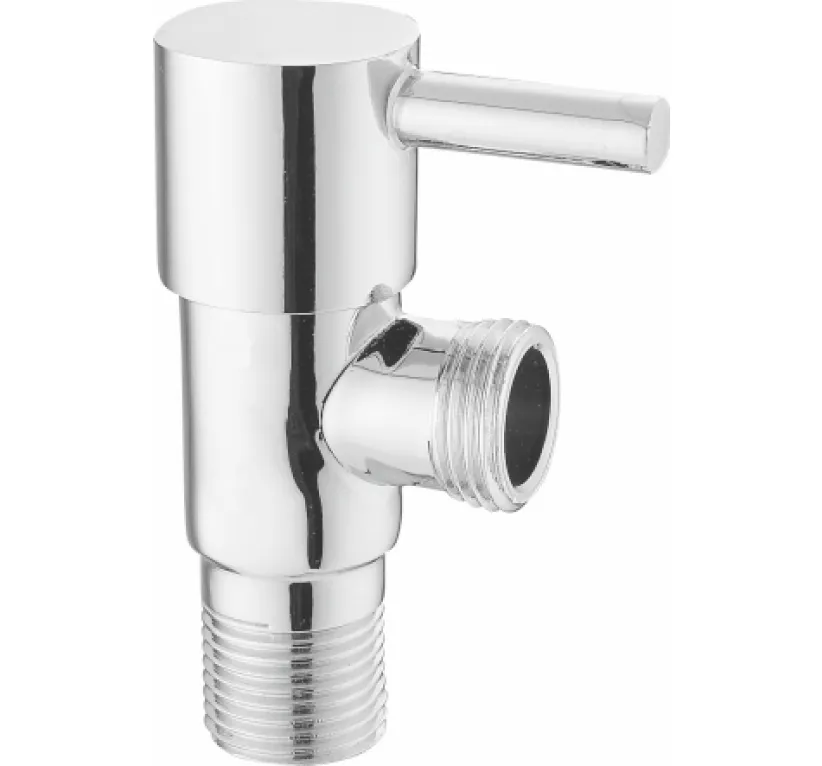
- Angle cock: the small valve that feeds the flush tank or the basin tap, so you can shut off one fitting without cutting the whole line. See angle cocks.
- Bib cock: the wall tap used for a bucket, in bathrooms, utility areas and balconies.
- Health faucet: standard in Indian bathrooms, and the fitting most likely to be bought on price and regretted, because a weak trigger fails first. See health faucets.
- Two way bib cock and angle cock: one inlet, two outlets, used where a washing machine shares a line.
Kitchen Faucets
Kitchen taps take more abuse than bathroom taps. Hot vessels, oil, and constant use. Three types cover most kitchens.
- Sink cock: single supply, wall or deck mounted, the workhorse.
- Sink mixer: hot and cold, useful where a geyser feeds the kitchen.
- Single lever sink mixer: one handle, often with a taller spout that clears a deep vessel.
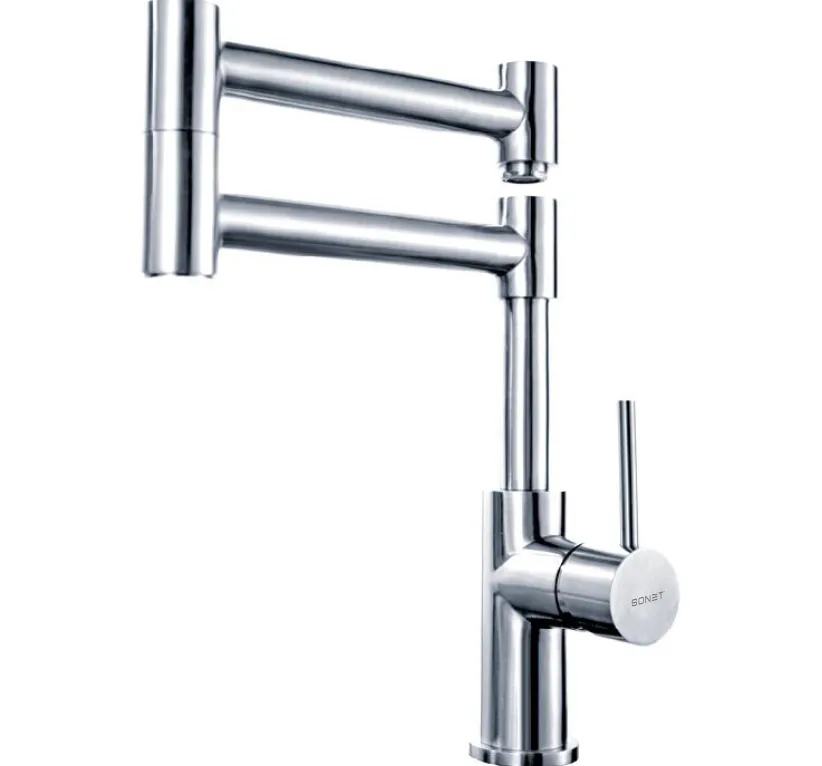
Spout height and swivel matter more than finish here. Measure the distance from the sink base to the tap outlet and check that your largest cooker fits under it. Our single lever sink mixers and sink cocks cover both patterns.
Materials and Finishes
| Body material | What it means |
| Brass | The standard for a main bathroom. Heavy, durable, threads hold up to repeated servicing. |
| Stainless steel | Corrosion resistant, lighter, common in kitchen fittings. |
| Zinc alloy and plastic | Cheaper, lighter, fine for a rarely used utility point, not for a main bathroom. |
On finishes, chrome remains the most practical choice in Indian conditions. It hides water spots better than matte black and it is the easiest finish to match years later when you add a fitting. Matte black and brushed gold look excellent and show hard water marks faster, so they suit homes with softened water or an owner willing to wipe them.
Pick up a tap before buying. Weight in the hand is the quickest guide to body material, and a light tap sold as brass usually is not.
Hard Water: The Bangalore Test
Much of the city runs on borewell supply, and hard water leaves scale on aerators within months. Two things follow from that. Choose taps whose aerator unscrews and can be soaked and cleaned, rather than sealed decorative outlets. And favour brands that stock cartridges locally, because a cartridge is a ten minute replacement if the part is available and a new tap if it is not.
How Many Faucets Does One Bathroom Need?
A typical Indian bathroom with a geyser needs: one basin tap or mixer, one wall mixer or diverter for the shower, one overhead shower, one hand shower if you want it, one health faucet, one bib cock, and two angle cocks. That list is why fittings often cost more than the tiles, and why a quote that says "faucet set" is impossible to compare. Our bathroom renovation cost guide breaks the full list down.
How to Choose
- Start with the basin. Table top basin means a tall body tap, counter basin means standard height, wall hung basin often means wall mounted.
- Decide single lever or quarter turn based on whether hot water reaches that point.
- Buy the diverter and concealed parts from a brand you can service, since they sit inside the wall.
- Match finishes within a bathroom, not across the house.
- Ask about cartridge and aerator availability before the warranty, because that is the part that will need replacing.
If you are weighing brands, our Kohler vs Jaquar comparison covers the two most asked about in the showroom, and the top sanitary ware brands in India guide covers the wider market.
Frequently Asked Questions
What are the different types of faucets?
By mechanism there are two: single lever, where one handle mixes hot and cold through a cartridge, and quarter turn or two handle taps. By application there are pillar cocks, basin mixers, tall body mixers, wall mixers, diverters, sink cocks, bib cocks, angle cocks and health faucets, each fixed at a different point in the bathroom or kitchen.
What is the difference between a pillar cock and a basin mixer?
A pillar cock has one water supply and no mixing, so it delivers whatever is in the line. A basin mixer takes hot and cold supplies and blends them. If there is no geyser line to that basin, a pillar cock does the same job for less money.
Which faucet is best for a table top basin?
A tall body mixer or tall body pillar cock. A standard height tap over a table top basin leaves the spout below or level with the bowl rim, which splashes and looks wrong. Check the basin height before ordering the tap, not after.
What is an angle cock used for?
It is the small shut-off valve feeding a single fitting, such as the flush tank or the basin tap. It lets you isolate one fitting for repair without shutting the water to the whole bathroom, which is why every plumber asks for two of them per bathroom.
Are brass faucets better than stainless steel?
For bathrooms, brass is the usual choice because the body is heavy and the threads survive repeated servicing. Stainless steel resists corrosion well and is common in kitchens. Zinc alloy and plastic bodies cost less and belong on utility points rather than a main bathroom.
Is matte black or chrome better in Indian bathrooms?
Chrome is more practical in hard water areas because it hides mineral spotting, and it is easier to match years later when you add a fitting. Matte black and brushed gold look excellent and show water marks faster, so they suit homes where someone wipes the fittings regularly.
How do I stop a tap from dripping?
In a single lever tap it is usually the ceramic cartridge, and in a quarter turn tap it is the spindle. Both are replaceable parts costing far less than a new fitting, provided the brand supplies spares locally. That is a question worth asking at purchase, not at failure.