- 1. Why pooja room tiles are different from other rooms
- 2. Marble-look pooja room tiles design
- 3. Poster tiles: Devotional and spiritual themes
- 4. Golden patti and border designs
- 5. Modern pooja room tiles design
- 6. Small pooja room tiles design
- 7. Vastu guidelines for pooja room tiles
- 8. How to choose the right pooja room tiles
- 9. See our pooja room tiles collection in Bengaluru
- 10. Frequently asked questions
27 August 2026
Pooja Room Tiles Design: Marble, Poster & Devotional Ideas for Indian Homes (2026)

The pooja room is the most personal space in an Indian home. It is where the day begins and where the family gathers during festivals (see our Diwali home refresh checklist), and the tiles you choose for this room carry a meaning that goes beyond aesthetics. The right pooja room tiles design creates an atmosphere of calm, devotion, and beauty that matches the spiritual purpose of the space. This guide covers marble looks, poster and devotional tiles, golden border designs, Vastu-friendly colour choices, and ideas for both dedicated pooja rooms and compact mandir corners, all from our curated pooja room tiles collection in Bengaluru.
Why pooja room tiles are different from other rooms
Pooja room wall tiles serve a different purpose than kitchen or bathroom tiles. There is no oil, no water splashing, no heavy foot traffic. What matters here is visual warmth, spiritual atmosphere, and a surface that stays clean with light dusting. This means you have more design freedom in the pooja room than in any other part of the house.
Ceramic wall tiles work perfectly for this space (no need for vitrified here since the room stays dry). The focus shifts entirely to design: colour, pattern, imagery, and the emotional tone the tile creates when you sit in prayer or meditation.
Marble-look pooja room tiles design
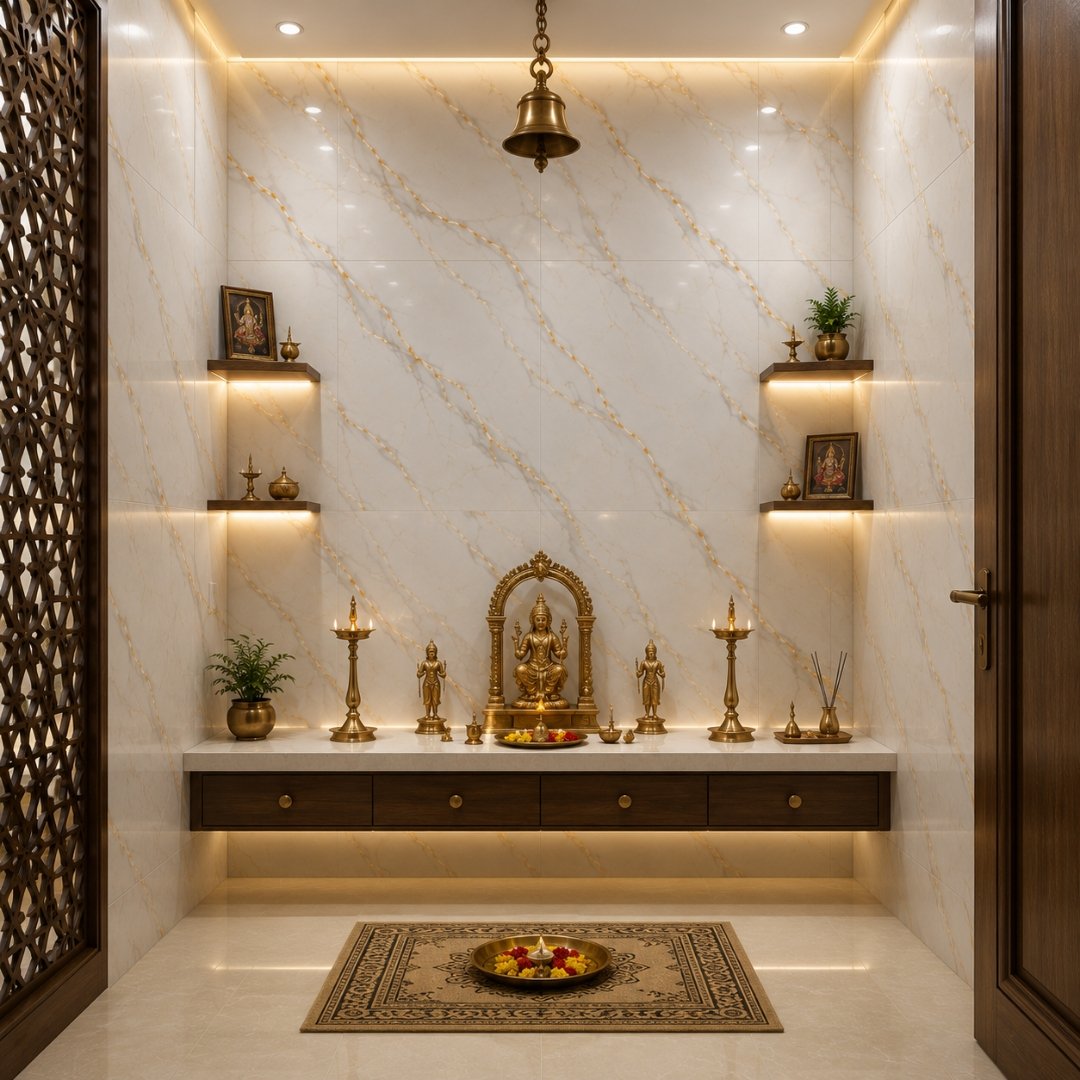
Marble has been the traditional material for temples and mandir spaces for centuries. Marble-look tiles bring that same sense of purity and permanence without the staining, maintenance, and cost of natural stone.
Idea 1: White Statuario marble-look on all three walls
A bright white marble tile with soft grey veining on the back and side walls of the mandir creates a clean, luminous backdrop for idols and lamps. White reflects diya light beautifully during evening prayers.
Idea 2: Warm beige Botticino marble-look
For homes that follow Vastu colour guidelines, warm beige and cream tones are considered ideal for the pooja room, particularly for rooms in the northeast corner of the home. Botticino marble-look tiles bring that warmth with a natural, unhurried elegance.
Idea 3: Light onyx or honey marble-look
A translucent onyx-look tile behind the main idol, backlit with a warm LED strip, creates a soft glow that turns the mandir wall into a gentle light source. This works particularly well in pooja rooms without windows.
Browse the full range of marble pooja room tiles.
Poster tiles: Devotional and spiritual themes
Poster tiles are one of the most uniquely Indian tile categories. These are large-format printed tiles that feature devotional imagery: deities, temple motifs, spiritual symbols, and traditional art forms, fired into the ceramic surface so the image lasts for decades without fading.
Idea 4: Deity poster tile as the central feature
A single poster tile with an image of Ganesha, Lakshmi, Krishna, or your family's chosen deity, placed behind the main idol or on the wall directly above the mandir shelf. The rest of the walls stay in plain marble-look or a soft solid colour, so the poster tile becomes the focal point.
Idea 5: Paired poster panels
Two matching poster tiles flanking the main idol, creating a symmetrical, temple-like arrangement. This works best in wider pooja rooms (4 ft or more) where the panels have breathing room.
Idea 6: Temple architecture motif
Poster tiles that depict carved gopuram columns, mandala patterns, or traditional temple door designs without specific deity imagery. These suit families who want a devotional atmosphere without a particular religious figure on the wall, and they work well in common areas of multi-faith households.
Browse poster tiles for pooja rooms at My Home Studio.
Golden patti and border designs
Pooja room wall tiles golden patti (golden border strips) are one of the most searched pooja room tile details, and for good reason. A thin metallic gold or brass-toned border strip framing the mandir area or running along the edges of the poster tile adds a sense of traditional richness that plain tiles alone cannot achieve.
Idea 7: Golden patti framing the deity panel
A slim gold border running around the central poster tile or marble feature, creating a frame-within-a-frame effect. The gold catches diya and lamp light, adding warmth and shimmer during evening prayers.
Idea 8: Horizontal golden band at shelf height
A single golden patti strip running horizontally across all three walls at the level of the mandir shelf. It visually unifies the room and marks the sacred zone above the shelf where idols and lamps are placed.
Tip: Golden patti strips are small-format accent tiles, not full wall tiles. Use them sparingly, as borders or frames, not as full wall coverage. Two or three strips in the right places add elegance. Too many create visual clutter in a space meant for calm.
Modern pooja room tiles design
Not every home has a traditional mandir room. In modern apartments, the pooja space might be a niche in the living room wall, a corner of the kitchen, or a compact shelf unit. Modern pooja room tiles design adapts to these layouts.
Idea 9: 3D textured tile in warm white
A single textured tile with a raised geometric or wave pattern on the mandir wall, in warm white or ivory. No imagery, no pattern, just subtle depth and shadow play. The tile reads as modern and designed while still feeling reverent.
Idea 10: Stone-look accent behind a floating shelf mandir
A natural stone-look tile (sandstone, travertine, or rough limestone texture) behind a wall-mounted floating shelf mandir. The earthy texture grounds the space and connects the modern shelf to a more organic, traditional feel.
Idea 11: Backlit translucent tile
A thin onyx-look or alabaster-look panel with LED backlighting behind the idol. The soft glow replaces the need for a separate lamp or spotlight and creates an atmosphere that feels both modern and meditative.
Browse plain pooja room tiles for minimal and modern options.
Small pooja room tiles design
Most apartments in Bengaluru dedicate 15 to 25 sq ft to the pooja room, sometimes less. In a small pooja room tiles design, every tile choice is magnified because you see the entire room from a single standing or seated position.
Idea 12: One poster tile, rest plain
In a compact mandir space, a single devotional poster tile centred on the back wall with plain ivory or cream tiles on the sides is all you need. The poster tile becomes the entire design, and the plain surroundings keep the small space from feeling busy.
Idea 13: Light colours, no dark tones
Small pooja rooms benefit from white, cream, soft gold, or light marble-look tiles that reflect whatever light is available, whether from a window, a diya, or an LED. Dark tiles absorb light and make the space feel like a cupboard rather than a sanctuary.
Idea 14: Same tile on all three walls
Using one tile throughout (instead of mixing patterns) makes a small pooja room feel more spacious and unified. Save the design statement for a single poster tile or a golden patti frame, and let the base tile stay consistent.
Vastu guidelines for pooja room tiles
Vastu Shastra influences pooja room design for many Indian homeowners. While tile choice alone does not determine Vastu compliance (room direction, door placement, and idol positioning matter more), colours do carry Vastu significance.
Northeast-facing pooja room
White, light blue, or cream tiles. These are considered the most auspicious for mandir spaces in the northeast corner, which is the ideal Vastu direction for a pooja room.
East-facing pooja room
White, yellow, or light green tiles suit this direction.
West-facing pooja room
White, blue, or cream tiles are recommended.
Colours to avoid in the pooja room
Black, dark grey, and very dark brown are generally avoided on pooja room walls in Vastu practice. These tones absorb light and are considered less suitable for a space meant to feel open, bright, and uplifting.
The safe default
white marble-look or warm ivory tiles suit every direction and every Vastu guideline. If you are unsure about your home's orientation, this combination will not go wrong.
How to choose the right pooja room tiles
1. Decide the style
Traditional (marble + poster + golden patti), modern (textured/stone-look + clean lines), or minimal (plain tile + floating shelf).
2. Pick the feature tile first
If using a poster tile, choose it first and match the surrounding plain tiles to its colour palette. If going marble-look, pick the marble tone and add accents (golden patti, LED) around it.
3. Keep the palette tight
Two tile types maximum in a pooja room: one feature (poster or textured) and one plain. Three or more types create visual noise in a small, sacred space.
4. Check the tile in diya light, not just daylight.
Pooja rooms are used most during morning and evening prayers when natural light is low. Take a tile sample, place it in the planned location, and light a diya or lamp next to it. The way the tile catches warm flame light matters more here than in any other room.
5. Order samples
Our team will help you pick the right combination for your mandir space, room size, and Vastu preferences.
For tile ideas in other rooms, read our guides on bathroom tiles, hall floor tiles, and bedroom tiles.
See our pooja room tiles collection in Bengaluru
The pooja room is deeply personal, and choosing the right tile from a photograph is harder here than for any other room. The way marble catches diya light, the detail in a poster tile's devotional imagery, and the shimmer of a golden patti border: these are things you need to see and feel in person.
Our BTM Layout showroom (right next to BTM metro station) has a dedicated pooja room tiles section with marble, poster, and plain options on display, alongside sanitary ware, faucets, and complete home hardware, so you can plan your entire home renovation in a single visit.
Frequently asked questions
Which tiles are best for a pooja room?
Marble-look ceramic tiles in white, cream, or beige are the most popular and Vastu-friendly choice. For a more personalised look, poster tiles with devotional imagery add a spiritual focal point. Both are available in our dedicated pooja room tiles collection.
What is a poster tile for a pooja room?
A poster tile is a large-format printed ceramic tile that features devotional imagery (deities, temple motifs, spiritual symbols) fired into the surface. The image is permanent and will not fade, peel, or wash off. Poster tiles are placed behind or above the mandir as a spiritual focal point.
What colour tiles are best for a pooja room as per Vastu?
White, cream, light yellow, and light blue are considered the most auspicious for pooja rooms in Vastu Shastra. Avoid black, dark grey, and very dark brown. A white marble-look tile is the safest choice across all room directions.
Can I use tiles in a small pooja niche or wall-mounted mandir?
Yes. Even a single poster tile or a marble-look tile behind a floating shelf mandir transforms the space. In compact mandirs, one feature tile with plain surroundings creates enough design impact without overcrowding.
What is golden patti in pooja room tiles?
Golden patti is a thin metallic gold or brass-toned border strip tile used to frame the mandir area or poster tile. It adds traditional richness and catches lamp light beautifully. Use it sparingly as a border or frame, not as full wall coverage.